VAPT: Why Vulnerability Assessment and Penetration Testing Matter
Jayakrishnan M
Contents Overview
Introduction
Given the fast-evolving nature of a digital world, cybersecurity has become more paramount than ever. With the escalation of cyberattacks, businesses are at an increased risk and remain vigilant about such potential vulnerabilities found in their systems. One major security feature has emerged to help organizations discover vulnerabilities even before malicious actors can seize them, and this is called Vulnerability Assessment and Penetration Testing, or VAPT, for that matter. What is VAPT? Why is it crucial in cybersecurity? How does it work in practice? All of this and more will be discussed in this blog post.
VAPT: Vulnerability Assessment and Penetration Testing
These are two types of security testing activities, similar yet different from each other, which, when combined, identify as well as remediate the system vulnerabilities in a comprehensive manner.
Vulnerability Assessment: Scans the system, network, and application to detect possible vulnerabilities in the form of misconfiguration, deprecated software, or security oversight. Vulnerability assessment provides a general view of the risks an organization is exposing itself to.
Penetration Testing: Unlike a vulnerability assessment, penetration testing is a form of testing that actually simulates a real-world attack. Ethical hackers use penetration testers, who try to exploit vulnerabilities detected in the assessment so that they can estimate their impact in case of such breaches.
Combining both the above processes, VAPT provides organizations with awareness of its security posture, encompassing identified risks as well as relevant solutions to abate them.
Difference Between Vulnerability Assessment and Penetration Testing
Vulnerability assessment and penetration testing both have the objective of improving security; however, there is a difference in their purposes. Here’s the difference:
Vulnerability Assessment (VA)
VAPT is applied to provide a report on the vulnerabilities within a system including their levels of severity.
Primarily focuses on identifying weaknesses rather than exploiting them.
Automated tools are used for scanning networks, systems, and applications.
Penetration Testing (PT)
This approach is applied when simulating an attack to exploit identified vulnerabilities.
Both the process is automated and manual-based, which helps give an overview of the vulnerability of the real-world risks involved.
It can be used to identify vulnerabilities that are most critical in need of immediate attention on the basis of the exploitability.
Importance of VAPT in Cyber Security
VAPT is amongst those measures that increase the overall security defenses of any organization. Here are some reasons why VAPT holds such a key role in cyber security.
Vulnerability Identification Proactively: VAPT allows organizations to detect vulnerabilities before attackers do. In other words, it prevents the attacker from exploiting the vulnerability in advance so that companies avoid a potential breach or system disruption.
Comprehensive Security Testing: Compared with a basic vulnerability scan that provides an overview of weaknesses in a system, penetration testing shows how those weaknesses may be exploited. This comprehensive approach makes businesses fully aware of their security posture.
Compliance Requirements: Almost all such industries-from healthcare to finance-have specific compliance norms, such as GDPR, HIPAA, or PCI-DSS. Since VAPT finds all the vulnerabilities that can eventually cause non-compliance, it will help organizations achieve the norms set by these regulations.
Risk Prioritization: Not all vulnerabilities carry an equal risk. VAPT enables firms to prioritize them according to their exploitability and resultant impact so that IT teams can work on the most critical threats first.
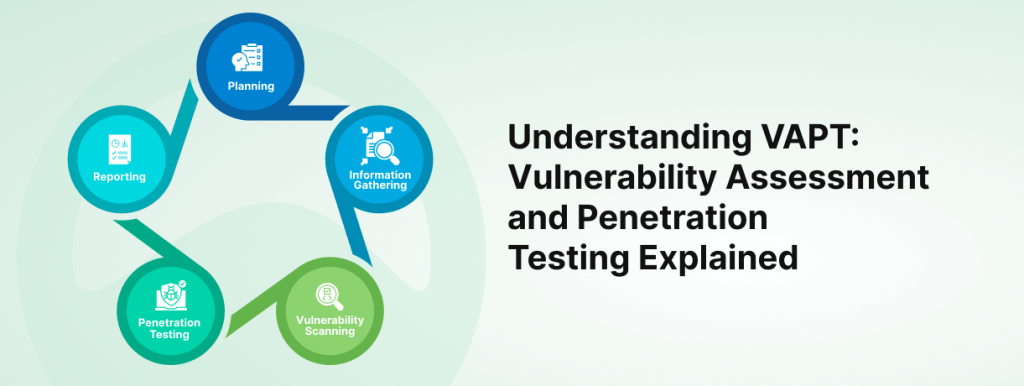
How VAPT Works: The Process
Planning and Scoping: The first step of VAPT is determining the scope of the test. This includes the systems, applications, or networks that you are going to assess. Besides that, identify the objectives of the testing process, such as finding critical vulnerabilities or general appraisal of security posture.
Vulnerability Assessment: Automated scans can be performed using tools in the vulnerability assessment phase, scanning for potential weaknesses in your target systems. Famous tools include Nessus, OpenVAS, and Qualys, often using their capabilities to identify areas within the system that have outdated software, ports opened, or misconfigurations that make it very easy to gain access. The result of such a scan is a report summarizing all detected vulnerabilities along with their assigned severity level.
Consider a scenario where you are performing a vulnerability scan for an e-commerce site owned by a retail chain. The scan suggests the CMS running on the platform is the oldest version and, hence, a known weak spot that can be exploited. All this information is communicated to the IT team and patched at once.
Penetration Testing: Once identified, vulnerabilities go through the stage of penetration testing. In penetration testing, white-hat hackers simulate an attack to capitalize on the identified vulnerability. Such is important to determine the extent to which an attacker could go if an attack successfully exploits a weakness.
For instance, in the example of e-commerce, an attack has vulnerable the outdated CMS by having inserted malicious code. This illustrates that an attacker could have easily taken credit card numbers and other sensitive customer data information.
Reporting and Remediation: Once the testing is completed, the VAPT team hands in a detailed report detailing all identified vulnerabilities, attempted exploits, and gives an overview of the security assessment. Remediation recommendations are provided with prioritization of which vulnerabilities to address first.
Tools Used in VAPT
There are several tools that can be used for both vulnerability assessments and penetration tests. Of these, some of the most widely used VAPT tools include:
Nessus: This is one of the commonly used vulnerability assessment tools to scan networks for weaknesses.
Metasploit: Penetration tool used by ethical hackers to exploit well-known vulnerabilities.
Burp Suite: Used generally for web application security testing; it assists users in identifying SQL injection vulnerabilities and cross-site scripting (XSS).
Wireshark: Network protocol analyzer used to capture data traffic and inspect such activities, which could help identify suspicious ones.
Best Practices in VAPT
The best practices meant to ensure your process of VAPT goes through smoothly include the following:
Clear Goals: Define clearly what you want to achieve through VAPT. Decide if it is compliance testing or finding the most critical vulnerabilities.
Choose Relevant Tools: It is a combination of automated tools and manual testing for the best results.
Test Periodically: Cyber threat evolves in real time, so companies need to perform VAPT periodically.
Prioritizing remediation: Remediate the most critical vulnerabilities first, especially those easiest to exploit.
Engage ethical hacking experts: Apply skilled ethical hackers and security professionals to ensure that your VAPT process is effective and comprehensive.
Conclusion
Vulnerability Assessment and Penetration Testing: An integral part of the overall cybersecurity strategy of any organization, it brings the power of vulnerability assessments and penetration testing in one entity. VAPT seamlessly shows a complete view of vulnerabilities of a system and offers actionable insight to prevent attacks before they happen. The implementation of VAPT helps enhance security, comply with business organizations’ requirements, and prioritize risks effectively.
With the growth of cyber threats, VAPT testing remains in vogue within the organizations that have a great desire to protect their assets and data. The techniques and tools of VAPT safeguard your business with the right devices and professional expertise.
Introduction Transparent VAPT services play a crucial role in strengthening organizational infrastructure security in this digital age. The present world has made vulnerability assessment and penetration testing an indispensable tool for protection against external threats. However, due to the increase in cyber threats, it is essential to have transparent VAPT services that maintain openness and […]
Learn how to set up Appium for iOS Simulator automation on macOS with this step-by-step guide. From installing prerequisites to running your first test, this tutorial helps engineers and QA professionals streamline their mobile app testing workflows.
Choosing the right QA partner is crucial for ensuring quality. Discover key factors to consider when selecting a testing service provider for your business.