5 Powerful Ways AR-Powered Retail Apps Are Transforming Customer Experience

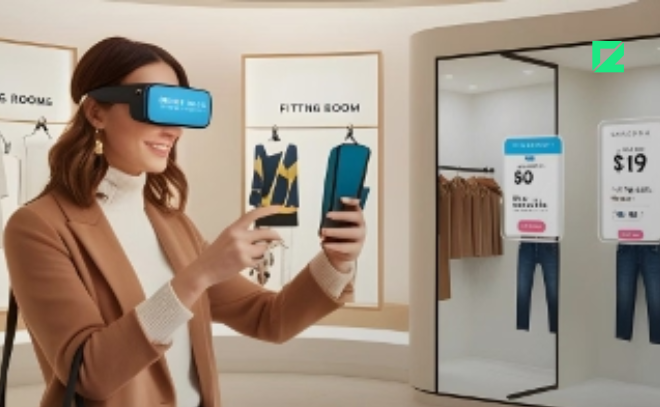
AR-powered retail apps enabling virtual try-ons and interactive product demo

Introduction

We are living in an era when AR-powered retail apps and retail competition has been intense, and expectations among customers have been at all-time highs for a long time. Every player in the retail space, be it Flipkart, Amazon, Meesh, and many more, has been innovating to the hilt to go one-up with their competitors. One needs cutting-edge technologies like augmented reality in retail to create differentiated shopping experiences. One of the most powerful tools that they claim has now emerged is AR retail apps. These retail applications powered by AR have revolutionized the way customers engage with brands, creating interesting, immersive, and personalized experiences across the boundaries of traditional in-store or online retail practices.

In this article, we shall detail five ways through which AR-powered retail apps are changing customer experiences through insights into the industry and real-life examples of implementations.

Virtual Try-Ons Using AR-Powered Retail Apps

Virtual try-ons are one of the most direct and popular uses of AR shopping apps. Customers will see, using camera smartphones, how clothes, accessories, or makeup will look on themselves. It bridges the gap between the physical and online shopping sectors. This narrows down choices for customers and gives them the correct choice because customers can see how exactly the object looks on them.

Case Study: Warby Parker

The Warby Parker AR-powered retail app allows users to virtually try on different frames. It thus selects the best one for you, having analyzed the facial geometry and your preferences. It thus creates a better experience for customers, implying little friction while buying from the company, more confidence for the customer, and fewer returns because they have made the wrong selection.

Engineering Insight: 

To the developer, this would mean using AR frameworks like Apple’s ARKit and Google’s ARCore, coupled with machine learning algorithms to map a user’s face. The overlay of the product has to be properly mapped in real time with optimized processing for seamless and lag-free output on consumer-grade devices.

Enhancing In-Store Engagement with AR-Powered Retail Apps

AR retail apps transform customers’ in-store experience of brick-and-mortar shopping, transforming a one-way experience of product browsing into a two-way interaction. With these applications, customers can interact with products in new ways scanning something to unlock additional details behind it to overlay digital content directly onto physical products.

Case Study: Lowe’s Vision App

Thus, customers will be able to scan items in Lowe’s stores and have an idea about how those items are going to look on their home due to the AR-powered retail app version of the Lowe’s app Users can also superimpose virtual models of furniture and appliances in real-world environments so that they can befit and aesthetically pleasing before they are actually purchased. An experience like that promotes engagement among consumers and increases sales.

Engineering Innovation: 

The apps have to accurately map the environment using AR spatial tracking. By embedding depth-sensing and surface recognition technology, the applications can know more about the real-world environments surrounding them to make virtual overlay “more realistic and interactive”. Besides, integrating with inventory databases and APIs makes it possible to refresh the updated information regarding the availability of products in real time.

Interactive Product Demos with AR-Powered Retail Apps

With respect to complicated or high-tech products, the use of AR retail apps allows for demonstrating the functionality of a product without necessitating a physical product. Customers will be able to see and understand their product using their phone as a 3D visualization tool to try out features and learn how a product could be used in an interactive simulation.

Case Study: IKEA Place App

The IKEA Place app uses augmented reality in retail by taking the camera view of a person’s phone to place virtual furniture in a home. It thus allows an immersive experience to thereby clearly visualize the size, scale, and style of the furniture-this is why customers will be more informed when purchasing this furniture. It eliminates the uncertainty that usually accompanies buying big items on the web, where one cannot see them physically before buying.

Engineering Insight: 

What is required, to present a great product demo with AR, is the optimization of 3D models to be rendered on the phone. The thought would be to have rich yet light models, and efficient rendering techniques, which would make it smooth for the experience. Realistic texture, lighting, and shadows do their share in preserving the immersion.

AR-Powered Retail Apps for Enhanced Customer Support

AR retail apps do not just have shop purposes but also come to help a customer in support. It renders real-time guidance and troubleshooting through AR interfaces, thereby reducing calls to its customer service number for customers.

Case Study: Samsung AR Support

Samsung’s AR-enabled app enables the troubleshooting process with regard to issues being faced by customers in their products. All that the customer needs to do is point the camera of his phone toward the product, and this app will give him step-by-step instructions on visual remedies for the issue. This minimizes customer service intervention while enabling users to solve problems faster.

Engineering Insight: 

This capability is supported by computer vision algorithms that recognize the product and all its components. It is by the combination of this with AI-based diagnostic tools that the app can thus communicate relevant troubleshooting solutions to the user. How the employment of AR guidance could be effective will depend on two essential features object recognition and context-aware content delivery.

Hyper-Personalized Shopping with AR-Powered Retail Apps

AI and AR in retail together serve as a potent combination for retail apps. While AR enhances visual engagement, AI analyzes user behavior, preferences, and past interactions to deliver hyper-personalized recommendations and experiences. This integration can see serious progress in customer satisfaction through highly relevant product suggestions.

Case Study: Nike Fit App

Nike has developed an AR-enabled app that, by leveraging AI, is scanning people’s feet to determine the correct shoe size based on the shape of a user’s foot. It even suggests styles based on previous purchases and preferences. This presents an extremely personalized shopping experience where customers can both visually explore AR visualizations and get recommendations from AI.

Engineering Insight: 

The integration of AI with AR-based retail applications comes in the form of machine learning models which are trained on large datasets for a better understanding of customer preferences and behavior. These AI models can then be teamed up with AR frameworks to generate dynamic and context-aware experiences. While data processing is efficient, and customer information is secured because AI relies so much on data-driven insights, it is most important.

Conclusion: 

The Future of Retail is AR-powered.

No longer a trend but the momentous shift in how business interacts with customers, the adoption of AR-powered retail apps is the key to change for retailers. Be it virtual try-ons or product demonstrations, AR has revolutionized each and every aspect of the experience of the customer. For retailers, the sales-generating aspect brings along the greater meaning road to long-term customer loyalty by offering unique, personalized, and interactive shopping journeys.

Success for such applications will depend on the performance, quality of user experience, and security features that the companies will be able to integrate with cutting-edge AR and AI technologies.

Customized cutting-edge AI and AR solutions are exclusively suited to the specific needs of the retail industry. With broad expertise in not only augmented reality but also artificial intelligence, we can create innovative, secure, and scalable apps for the retail sector with unparalleled customer engagement and business growth.

More Blogs: Personalized Shopping with AR: 5 Powerful Ways It’s Transforming Retail Experiences

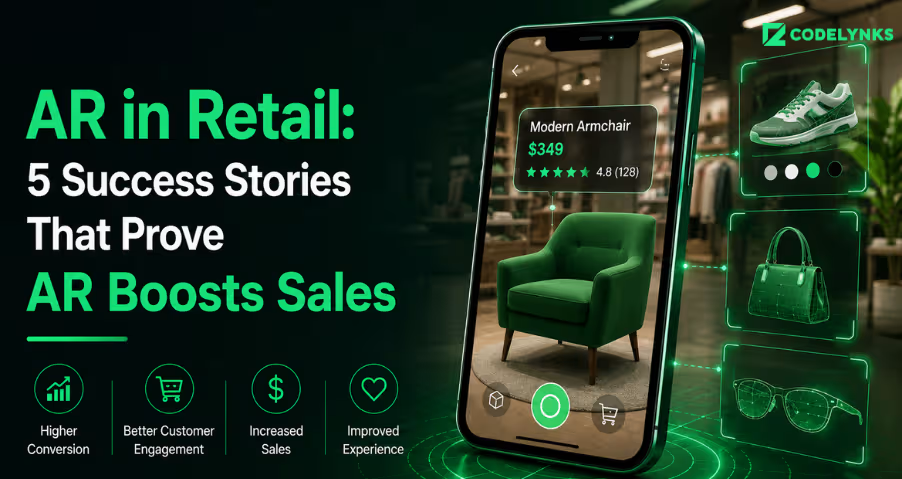
AR in Retail: 5 Success Stories That Prove AR Boosts Sales

AR in retail virtual try-on example

Introduction

The retail landscape has seen a sea of change in recent years, motivated by technological advancement and by the changing expectations of customers. One of the most game-changing innovations in the field is Augmented Reality (AR). Seamlessly blending digital content with the physical world, AR has given retailers new ways to interact with customers, personalize their shopping experience, and thus subsequently make sales.

In this article, we will find five retail success stories that prove how AR bumps up retail sales, increases customer satisfaction, and keeps them agile in an increasingly digital world.

IKEA: AR in Retail Revolutionizes Furniture Shopping

The furniture giant IKEA has been at the forefront of the adoption of AR to enrich customer experience. For instance, the company introduced the IKEA Place app, which could essentially help customers see what furniture would look like in their homes before they purchased it. It offers AR capabilities where customers will be able to see how a different piece of furniture would fit into their space; thus, making better decisions without visiting a store.

The IKEA app provides real-scale, high-resolution 3D models of all products available in the stores for the users to have realistic views of size and design in real-time before making a purchase. This has greatly reduced hesitation from customers about large purchases online, thus highly increasing sales in IKEA’s e-commerce.

IKEA has learned by success how precious it is to develop an immersive experience in shopping: so a customer who trusts himself through an immersive experience creates better conversion rates and lower return rates.

Sephora: AR in Retail Personalizes Beauty with Virtual Try-Ons

The beauty trade is personalization and visual appeal, and for all its latest successes, Sephora has successfully well-positioned its AR technology to maximize the engagement and sales it gets from customers. Using its Virtual Artist app, Sephora lets customers test out various makeup products completely virtually using just a smartphone or, for maximum immersion, through the company’s AR mirrors found in select stores.

This sales strategy, driven by the adoption of AR, can enable the ability of a customer to try various lipstick and eyeshadow looks without even getting up to reach for the testers. Sephora thusly can afford to deliver its modern shopper convenience and personalization – two needs that most modern shoppers have. Therefore, it has recorded increased customer satisfaction, improved sales conversion rate, and in-app engagement time.

The best example of this is the fact that enabling virtual try-ons through AR makes a setting like the customer even more loyal, reduces decision fatigue and enhances product discovery factors towards driving retail sales.

Nike: AR in Retail Ensures Perfect Shoe Fit

The company had, for a long time, been a front-runner for innovation. In using AR for the retail space, it is no exception. Using Nike Fit within its mobile app, the company addressed one of the most common challenges to online shoe shopping—finding the correct size.

This AR-enabled solution scans a customer’s feet and then gives recommendations for the most appropriate shoe size based on their measurements. Nike resolved uncertainty over fitting shoes for customers through its improvement of the online shopping experience, increasing sales, and lowering the incidence of returns that are expensive for the retailer while proving costly for the customer.

Through AR integration, the shopping journey will be personalized, data-driven, and enhanced for shoe buying: thereby giving its customers a bit of assurance when purchasing their product, hence raising conversion rates.

L’Oréal: AR in Retail Enhances Product Discovery

Another that is doing better in beauty using AR is L’Oréal, which has been widely activating the use of augmented reality across various media and touchpoints to discover products more effectively and increase sales. It therefore acquired AR company Modiface and developed apps that permit users to ascertain exactly how they will look with hair colors, skin treatments, and cosmetics before they are bought.

Besides their virtual try-on, L’Oréal also armed in-store experiences with AR that enable customers to scan products for personalized recommendations or more information on related products. It is such immersive experiences that have helped succeed in both in-store and online sales.

In this way, L’Oréal demonstrates how convenience, personalization, and immersive engagement can help empower a firm in the beauty industry to make it easier for customers to make quick, confident choices.

Home Depot: AR in Retail Simplifies DIY Product Visualization

What home improvement and DIY enthusiast wants to know what the product will look like in their environment before they purchase it? That’s when Home Depot realized and therefore developed an AR feature on its mobile app to enable the customer to see how a faucet, appliance, or decoration will look in the homes.

The tool, AR, provides real-time scaling and accurate placement. Thus, customers can easily ensure that the items they choose fit into their space. This has given rise to increased customer satisfaction owing to purchase confidence.

Home Depot has made AR product visualization successful, which reduced product returns and increased overall sales. This supports the argument that even in industries where customers are accustomed to a tactile shopping experience, AR can bridge the gap between digital and physical shopping needs.

Conclusion:

How AR Improves Retail Sales: Through these examples, there is seen a face of change in how retailers will interact with customers and sell. AR in retail immersive experiences bring so many benefits to businesses and consumers, including the following:

Increased Customer Confidence: AR in retail lets shoppers try before buying or see what the product looks like in their space; therefore, no guesswork happens, and customers are more confident about purchasing.

Improve Personalization: AR in retail can be quite a very potent tool for retailers to give customers more personalized shopping experiences. This can greatly lead to increased customer satisfaction and loyalty.

Boosted Engagement: Features on AR in retail , such as virtual try-on or product visualization, come in a fun, interactive experience that keeps the customer engaged for a longer time and therefore boosts sales.

Increase Fewer Returns: By helping customers better understand the fit or look of a product, AR in retail minimizes returns-a real hurdles, particularly in e-commerce.

Increased conversion rates, better customer engagement, and higher sales productivity are some of the benefits gained from retailers that utilize AR in retail.

As cited from these retail success stories, some of the biggest advantages one can acquire from using AR in retail is through improving customer experience as well as the generation of better sales. Whether it’s a virtual try-on, a tailored recommendation, or real-time visualization of products, AR is supporting business needs in the form of evolving demands required by the modern customer.

Codelynks is committed to unlocking business outcomes for companies through AR in retail. We develop customized AR solutions for retailers so they can create immersive and engaging shopping experiences that lead to customer loyalty and revenue growth. Let us help your business grow with AR, so you can dominate the competitive retail landscape.

More Blogs : 7 Game-Changing Examples of How AR and AI Integration is Revolutionizing Industries

AR and AI in Customer Experience: 5 Powerful Case Studies Driving Engagement

Illustration showing AR and AI in Customer Experience enhancing user engagement

As customer expectations change with every passing day, there is always innovation in how to better communicate the message to the customers. One such revolutionary change in this space is the integration of Augmented Reality (AR) and Artificial Intelligence (AI) in Customer Experience. Together, AR and AI can help companies create data-driven, personalized, and immersive experiences that can increase the brand’s presence and foster loyalty among its customers.

Here, we’ll discuss five integral ways the combination of AR and AI in Customer Experience is revolutionizing customer interaction, backed by real-life case studies and expert insights from the field.

Personalized Shopping Experiences

The future of the retail industry is bringing a revolution with Augmented Reality (AR) and Artificial Intelligence (AI) in Customer Experience. The blend of AR and AI has changed how retail customers perceive their products. AI-powered recommendation engines create personalized shopping experiences while working closely with AR visualization tools that seem tailor-made for every user.

Case Study: Sephora Virtual Artist:

The virtual makeup try-on feature through the mobile application has seen Sephora successfully integrate AR and AI in Customer Experience into their systems. This means that AI analyzes skin tones and preferences as customers see virtually how different products will look on their skin in real time using AR. This reduces return rates while users achieve higher satisfaction levels because they can make more informed purchase decisions.

Security Concerns: Such an enormous amount of customer data requires strong privacy measures, encryption, and adherence to data protection laws like GDPR. The integrity of the AI algorithms and AR platform must also be guaranteed to prevent breaches that could compromise customer trust.

Enhancing Customer Support with Value-added Goods/Services with AR and AI

AI-powered chatbots and virtual assistants, combined with AR, makes for a seamless support experience with customers. Through these solutions, businesses would automate routine customer queries while providing visual, step-by-step aid using AR.

Case Study: IKEA Place and AR Support

For example, IKEA allows customers to place furniture in their homes through augmented reality (AR) and AI in Customer Experience before making a purchase. This enables users to check the size and style of the furniture prior to buying. The app, enhanced with AI, learns user preferences and subsequently provides tailored suggestions on what to purchase. By improving the customer experience with AR and AI, the service also guides customers in assembling the item, turning what could have been a frustrating process into an interactive and engaging experience.

Security Issues: The AI-based customer service system contains considerable personal data, making security a critical concern in AR and AI in Customer Experience. To ensure protection, it is essential to prevent unauthorized access and cyber-attacks, enabling secure communication between AI systems and users. Therefore, multi-factor authentication (MFA) and robust data encryption should form integral components of any AR and AI-powered customer experience system.

Immersive Brand Experience through AR and AI

AR and AI in Customer Experience together are redefining campaign marketing. Brands can generate experiential outreach that captures customer attention in innovative ways. With AI, customer behavior and preferences are analyzed, enabling highly targeted campaigns, while AR creates memorable and immersive interactions for users.

Case Study: The AR Marketing Campaign of Coca-Cola

Coca-Cola leveraged the application of AR and AI in Customer Experience to provide an interactive marketing experience for users. Customers could use a limited-edition can to unlock virtual games and experiences. AI analyzed patterns of user interaction to refine the campaign, enhancing consumer engagement and interaction. By linking AR with AI, Coca-Cola achieved significant increases in brand awareness and customer experience.

Security Risks : Increased integration of AR and AI in Customer Experience into marketing means there’s an open door to cybersecurity risks such as leaking data, phishing attacks through malicious AR applications, or hacking of the AI model. Hence, organizations need to invest in strong security measures such as penetration testing and also in managing secure APIs, be it for their brand or a product related to their customer’s data.

Product Development and Testing Process Simplified

The product development process has greatly been streamlined with AR and AI in Customer Experience.. On the one hand, AI analytics provide insights into user preferences and behavior, while on the other, AR enables companies to create virtual prototypes and conduct user testing scenarios without the need for physical products.

Case Study: Nike using AR in shoe design

Nike uses AR and AI in Customer Experience to support the product development cycle. With the use of AR, the designers view 3D prototypes of shoes. It can be dynamically changed. The AI makes predictions regarding what the customer may prefer and is based on historical sales data and trends. As a result of this process, the development timelines are reduced while improving how accurately these companies can predict the customers’ demand.

Security Concerns: Proprietary information needs to be safeguarded for organizations using AR and AI in Customer Experience for product development. Malicious parties should be kept at bay from AI and AR systems. Therefore, protecting those systems from industrial espionage and intellectual property theft is a challenge. There must be end-to-end encryption as well as secure DevSecOps for safeguarding a product pipeline.

Data Insights for Experience using AI-Powered

Probably one of the more significant benefits of using AR and AI in Customer Experience is the ability to compile a lot of interaction data of customers. From this, AI can provide actionable insights that companies might be able to use continuously to refine and optimize AR experiences for better engagement and conversion rates.

Case Study: BMW’s AR Configurator

BMW has an AR and AI in Customer Experiencecar configurator through which users can design their automobiles themselves with the help of augmented reality in real time. AI analyzes preferences to give specific color schemes, features, and accessory recommendations. The use of AI would allow for tailored experiences for every user and, therefore, more satisfied customers and higher conversion rates for BMW.

Security issues: The collection and analysis of user interaction through AR and AI in Customer Experience raise significant security concerns. Data integrity has to be assured, storage secured and user data anonymized to protect customers from breaches or misuse by companies.

Conclusion: 

Unlocking AR and AI Potential

By combining AR and AI in Customer Experience,, new avenues are opening for customers to achieve unmatched improvements in life in any given industry. From one’s personalized shopping to immersive brand engagement, AI and AR are already raising the bar on the standard of interactions between a business and its customers. A delicate balance, however, is necessary, with cybersecurity robust powers to prevent hacking into people’s user data.

As a cybersecurity and AI-driven technology services firm, Codelynks customizes solutions to ensure that the AR and AI in Customer Experience systems in question are secure, compliant, and innovative. Through their help, businesses can unlock all the potential of AR and AI without being compromised or violating security and privacy.

Similar links : Personalized Shopping with AR: 5 Ways It’s Transforming Retail Experiences

7 Game-Changing Examples of How AR and AI Integration is Revolutionizing Industries

AR and AI integration transforming industries with innovative solutions by Codelynks

The integration of Augmented Reality (AR) and Artificial Intelligence (AI) is no longer a futuristic concept, but a fast-emerging reality that transforms healthcare, retail, and many more sectors. And as these technologies combine, they open up new areas to enhance user experiences and integrate operations in more innovative solutions to complex problems.

At Codelynks, we design end-to-end solutions integrating AR and AI to the best of our abilities while being strictly tailored for industry-specific needs. The following blog will elucidate the seven ways AR, coupled with AI, is transforming different sectors and noting its potential to revolutionize business performances.

1. AR and AI Integration in the Healthcare Industry

One of the most promising applications of AR and AI integration is in the healthcare industry. AI algorithms can look into medical data, identify diseases, and provide recommendations for treatment. When paired with AR, complex medical data can be visualized in real time by healthcare professionals, allowing deeper insight when operating or having a consultation with patients.

For example, surgical headsets enabling AR can help surgeons visualize organs or bones during surgery, reducing risk and increasing success rates. Meanwhile, the AI-driven system will be constantly studying the patient data; it will suggest improvements for procedures. Codelynks is currently working on designing AR and AI solutions to make surgical training more effective, diagnostics faster, and patient care improved for better health results in the healthcare sector.

2. Retail: Revitalizing In-Store Experience

For one, the retail sector embraces AR and AI to create more personal, immersive shopping experiences. Using AR lets customers try on products from the house – be it clothes, accessories, makeup – without physically touching them. AI takes this further by suggesting products based on user preference or purchasing behavior.

For instance, combining AI-powered chatbots and apps with AR will enable customers to see how the furniture will appear in their home or the size of a piece of clothing that will fit their body type. Using both AR and AI, retailers can optimize the inventory management system, predict trends, and personalize customer interaction. Codelynks engages with market leading retailers who utilize AR and AI in eCommerce application programs and enhance customer experience and sales.

3. Efficient Manufacturing thru AR and AI

AR/AI integration in the manufacturing industry is optimizing the production process towards better worker safety and less downtime. For instance, AR systems can guide workers through complex tasks by projecting step-by-step instructions directly onto machinery. AI scans machine data to predict the need for maintenance and prevent equipment failure.

In this regard, for example, AR glasses can be allowed on the field for technicians to use real-time guidelines and machine diagnostics. The health of equipment is monitored through AI-powered sensors. This way, errors by humans become as low as possible because issues can be detected early. Codelynks leads the adoption charge of manufacturing AR and AI solutions that will raise intelligent factories and boost overall operational performance.

4. Revolutionizing Education through Immersive Learning

In fact, it will be hugely augmented in education because with AR and AI combined. AR brings the students closer to interactive 3D models of complex subjects such as anatomy, engineering, or architecture for example, thus relating their learning to more immersive activities. AI tailors the content of education to the individual style of learning, making recommendations to the students for materials to study or exercises to be done.

For instance, in a class setting, AR can bring historical events to life, while AI would analyze the same student performance data to readjust teaching strategies. Combining these innovations, educators can now more effectively teach and enable better student outcomes. Codelynks is pioneering the design of AR- and AI-powered educational tools that create a highly immersive and personalized learning environment for students across all disciplines.

5. Automotive Industry: Innovation with AR and AI

AR and AI in the auto industry contributes to innovation in design, production, and user experience. AR-backed HUDs can project critical information regarding a driver’s journey directly onto the windshield for the driver to focus on while driving. AI goes one step further by analyzing real-time traffic flow, weather conditions, and behavior of the driver to offer predictive assistance.

Furthermore, AR is changing the way vehicles are designed because it allows engineers to have an in-real-time ability to manipulate 3D models of the designs. AI helps optimize vehicle performance through predictive analytics, which means better fuel efficiency and safety features. Codelynks is working with automakers to introduce such innovations in the process of their productions as well as in-car experiences by integrating AR and AI technologies in the design and interfaces of their user interactions.

6. AR and AI in Improving Customer Services

The integration of AR and AI into customer service helps businesses in providing support from other perspectives. An AI chatbot can immediately respond to a customer’s question, while an AR application allows for visual troubleshooting. For example, a customer can use the AR apps to point their smartphone camera at the malfunctioning device and then be led through repair by AI systems.

This reduces the engagement of human beings, saving cost and increasing satisfaction from customers. Codelynks has developed AI-driven customer service solutions, incorporating AR technology to make problem-solving intuitive and effective.

7. AR and AI Integration in Real Estate

The use of AR and AI in the real estate industry has led to the transformation of the way properties are marketed and sold. With AR, prospective homebuyers can view tours of properties from their homes. Experience is made even more convenient with AI, as it suggests places based on a buyer’s preference and predicts the direction the market will take.

Using an AI algorithm could analyze user preferences and give recommendations of properties that match those criteria. AR, however, lets the buyer explore properties in more detail and even change décor or layout to suit his tastes. Codelynks is allowing real estate companies to adopt AR and AI technologies so that property buying can be an experience that is both interactive and data-driven.

Conclusion: 

The Future of AR and AI Integration: AR and AI hold tremendous promise in revolutionizing industries by going deeper into healthcare, retail, and so much more. While advancements in these technologies, businesses that adopt AR and AI will be in the forefront of innovation for both process optimization and user experience.

At Codelynks, we lead the way to deliver industrial-specific AI-driven AR solutions. We stay ahead of technology trends to ensure that our clients are always ahead in being competitive and maximizing their potential in a world rapidly going digital.

Want to explore more learning tips? Check out our article on AR and AI Ethics: 5 Critical Considerations for Privacy and Security to enhance your skills and knowledge.

Personalized Shopping with AR: 5 Powerful Ways It’s Transforming Retail Experiences

Customer exploring personalized shopping with AR using smartphone inside a modern retail store.

Introduction

In a world where consumers are actively searching for convenience and engagement, personalized shopping with AR is transforming the retail environment. Augmented reality (AR) brings digital elements to the real world, which allows retailers to deliver their customers specially customized experiences that had been impossible before. Personalization now has become more than a trend in the customer-centric retail sector-it is a necessity. With AR technology, the retailer can meet such expectations by providing an immersive and relevant shopping journey.

In this blog post, we are going to discuss 5 ways personalized shopping through AR is changing the game when it comes to retail and what it means for businesses seeking to stay one step ahead.

Virtual Try-Ons for Personalized Shopping with AR

The most visible application of personalized shopping with AR is in virtual try-on technology. Clothing, eyewear, and cosmetics companies use AR to allow customers to try products virtually, making recommendations personalized based on their preferences.

For instance, customers can use AR-powered applications to imagine how a pair of glasses or a certain shade of lipstick would look on them. This technology is enhancing online shopping and reducing the possibilities of returns. Brands create trust and drive customer satisfaction through this technology by giving them relevant product recommendations.

Personalized Shopping with AR for Product Discovery and Navigation

AR takes product discovery to the next level by taking online shopping to the offline platform and vice versa, enabling more immersive shopping. Retailers could guide customers in product selection by using AR suggestions that are personalized according to the customer’s preferences. For example, an in-store display could be based on purchases or products that a customer has browsed online in the past.

Such retail innovation brings both the online and offline channels closer, as the product that a customer would be interested in will have minimal efforts in searching for such products. It allows navigation on how customers spend less time hunting for products and more time engaging with the right products.

Interactive Loyalty Programs and Promotions

Retailers can make AR apps more personal and interactive experiences for the customers by stimulating loyalty programs. For example, one may get the special treats or discounts only through participating in an AR-based treasure hunt or challenge within that store.

Personalized offers solicit higher levels of customer engagement and loyalty to the brand. Businesses infuse uniqueness to the loyalty programs through the integration of AR, letting the customers return to stores, therefore turning shopping into an enjoyable and rewarding experience.

Customized In-store Experience using AR

With the aid of AR, the in-store retail experience of the customer can be customized: this is so because AR gives real-time information on products. The consumers may use an AR application in their smartphone to read the barcodes of products and obtain actualized information such as care instructions, compatibility with other purchases, or user reviews.

Certain retailers have even adapted their shopping assistants powered with AR, that accompany the customer through the store, specify what matches their taste and assist them in making a smooth purchase. This is an innovative application of ARs, not only elevating customer satisfaction but also increasing in-store engagement.

Real-time data insights for better personalization

In fact, on the back end, retail AR provides much more useful data for businesses to fine-tune their personalization strategies. Through AR interactions, retailers can determine which products a customer finds the most interesting or how a customer navigates a store.

Insights from that data allow retailers to fine-tune subsequent recommendations and promotions for particular customers. The ability to provide real-time, tailored shopping experiences deepens customer relationships and makes repeat business much easier to come by.

Conclusion

Personalized shopping with AR transforms retail environments, creating new opportunities for communicating with customers and enhancing the overall experience. Virtual try-ons, recommended items tailored to individual preferences, and loyalty programs in interactive formats open the doors for meaningful interaction between the retailer and their audience through AR.

Businesses seeking to be competitive in the retail market can no longer afford not to embrace AR technology as part of their offerings. Retailers should focus on using technology that can create immersive, personalized shopping journeys for customers to help build lasting customer relationships and increase satisfaction.

As AR technology becomes more sophisticated, so does the potential for its use in retail: from immersive experiences in the stores themselves to personal styling consultations. At the moment, personalized shopping with AR provides a powerful tool for tailoring retail journeys to meet customers’ needs for engagement.

With AR shaping the future for shopping, retailers who adopt this technology will be best positioned to lead the charge on providing that customer experience which today’s shopper needs.

More Blogs: 7 Game-Changing Examples of How AR and AI Integration is Revolutionizing Industries

6 Powerful Steps for AR Implementation in Retail: Transform Customer Experience

AR Implementation in Retail – customer using augmented reality try-on mirror

Introduction

AR Implementation in Retail is transforming the shopping experience, enabling customers to try products virtually and interact with digital displays. This way, retailers use AR to enable interaction and increase sales with the customer, from virtual try-ons to interactive product displays, enhancing the customer experience, streamlining operations in an increasingly digital world.

In this guideline, we will break down the main steps of setting up AR in retail-the technical, integration approach, and best practices for a successful launch.

Benefits of AR Implementation in Retail

Before going into the nitty-gritty of the implementation, let’s discover the benefits you can anticipate from your retail business. With augmented reality, you get to enjoy several advantages, such as

  1. Engagement of More Customers: A key advantage of AR Implementation in Retail is increased customer engagement and reduced product returns.
  2. Personalization: AR lets retail companies provide recommendations to customers based on what a customer likes and what a customer is doing by using the device.
  3. Lower Return Rate: Virtual try-ons and product visualization tools make customers less likely to return the products because they will see what they are going to look like.
  4. Higher Sales: An engaging, convenient experience will translate to conversion rates and, thus sales.

These advantages will allow you to harmonize your AR strategy with other business goals.

Choosing Technology for AR Implementation in Retail

There are numerous AR technologies in the market today and hence the proper one needs to be chosen for proper utilization. Some of the most common types of AR technologies that retailers use are:

  1. Marker-Based AR: This method applies a marker like QR codes for the creation of digital overlays once scanned using a smartphone or tablet. Interactivity in product display and marketing campaigns is usually created by this technique.
  2. Markerless AR: Also known as location-based AR, the user does not require special markers to interact with AR content. The application is ideal for virtual try-ons, navigating shops, and viewing products.
  3. Projection-based AR: It allows projecting virtual images into real-world surfaces to be perceived by the customers as digital displays in actual environments. The most popular usage would be on interactive store displays and pop-up experiences.
  4. Superimposition-based AR: Superimposition AR automatically replaces part of the user’s view with an augmented image, widely used in virtual fitting rooms and furniture visualization.

The right AR technology will rely upon your business model, the type of customer experience you would like to create and how it meets the needs for your retail environment.

Define Your AR Use Case

One of the key factors in using AR effectively in retail is to define your specific use case. Identify what aspects of your retail operations or customer experience can benefit from AR. Some of the most prevalent use cases in retail include:

  1. Virtual Try-Ons: Through AR, customers are now able to try out on their outfits, accessories, or makeup before purchasing them. This is a very popular concept in the fashion and beauty industries.
  2. Product Visualization: AR allows customers to see furniture, appliances, or home decor in a customer’s space, helping them make informed decisions before they buy.
  3. Interactive In-Store Displays: AR can transform static in-store displays into interactive experiences that may offer product information, reviews, and offers.
  4. Inside-Store Navigation: By implementing AR, vast retail areas can offer a real-time navigation support to customers; that is, they are directed towards the products or the exact areas in the store efficiently.

You can adjust your implementation strategy and the right technology based on your well-defined use case of AR to achieve your desired goals.

Invest in Right Hardware and Software

What determines the success of AR is proper hardware and software selection in a retail environment. For most retail companies, smartphone-based AR might be the closest convenience available, considering that the customers can share AR experiences by accessing the same through the mobile device. Depending on your use case, however, you may also have to invest in more specialized hardware components like:

  1. AR-Enabled Mirrors or Displays: These devices enable the customers to collaborate with AR content in-store, such as trying out clothes or previewing the products.
  2. Smart Eyewear or Headsets : Some retail companies have explored the implementation of AR headsets or smart glasses which can offer customers an even more interactive, hands-free experience with digital content.
  3. Custom AR Applications or Platforms: Developing a custom AR app or using an existing AR platform such as Snapchat’s Lens Studio or Shopify AR enables you to engineer unique experiences particularly well-suited to your brand and products.

Your AR system also must be compatible with your existing retail technology and infrastructure. This is where you would want your current integration process to be smooth.

Development of AR Integration Strategy

AR is best planned and coordinated across all departments- marketing, IT, and customer service. For developing a successful AR integration strategy, here are some of the key steps that lead to an effective integration process:

It demonstrates cross-team collaboration, such that any AR implementation would reflect both customer-experience goals as well as technical capabilities.

  1. Test it, then iterate: Prepare a pilot program for smaller-scale AR to get feedback and improve experience before its larger rollout. This will help identify technical issues or improvements related to customer experience.
  2. Seamless Omnichannel Availability: Ensure that your AR experience is seamlessly integrated with online and in-store retail channels. Customers should find an easy way to access AR features from mobile, kiosk in-store, or even through your website.
  3. Empowering the Front Line Support: Preparing the staff with the appropriate skills and knowledge to support AR-related interactions with customers, for instance, when helping out in interaction at displays inside the store or addressing technical issues in AR apps.

And by doing so, you will be able to achieve the maximum value of your AR implementation for the customers and your business.

Measuring Success of AR Implementation in Retail

After your AR solution is in operation, there ought to exist a mechanism of measuring its effectiveness. Some of the key KPIs tracked include

  1. Customer Engagement: One major benefit of AR Implementation in Retail is higher customer engagement. Track the frequency with which customers engage with your AR experiences, tracking engagement levels by quantifying app usage, time spent, and repeat visits.
  2. Sales Impact: Track conversions, increases in average order value, as well as decrease in product returns that AR experiences deliver.
  3. Customer Satisfaction: Collect customer feedback regarding whether or not AR enhances their shopping experience and if their expectations are met.

By checking on these metrics from time to time, you will be able to refine your AR strategy so that it keeps on delivering value to your business over time.

Conclusion

Businesses that embrace AR Implementation in Retail will stay ahead in customer experience innovation. Retail is one brilliant opportunity to increase consumer experiences, encourage customer engagement, and sell more with AR. You will succeed in the integration of AR into your retail environment by selecting the right technology, defining your use case clearly, and developing a clear plan of integration. As AR continues to advance, retailers and their customers will be well prepared to stand out in a very competitive marketplace and deliver value to your customer sets. Retailers focusing on AR Implementation in Retail will enhance customer experience and drive measurable sales growth.

Related blog : Personalized Shopping with AR: 5 Ways It’s Transforming Retail Experiences

The Future of AR in Omnichannel Retail: 5 Trends to Watch

AR in Omnichannel Retail enhances online and offline shopping experiences

Table of Contents

Introduction

With the retail sector changing so rapidly, it’s only apt that the fundamental shift within that paradigm would come about through AR in omnichannel retail. Today’s consumers eagerly await a seamless connection between their online and offline shopping; augmented reality has become an invaluable tool in fulfilling that expectation. AR is used by retailers to merge the ease of e-commerce with the benefits seen at the real physical stores in a channel-agnostic manner, thus creating an integrated journey that engages and delights customers.

We will provide an elaborate view of 5 major ways AR is changing online-to-offline shopping and how it becomes indispensable in the retail space.

Virtual Try-Ons for Personalized Shopping: An area where AR will be very influential in omnichannel retail is through virtual try-ons. Clothing and accessories retailers as well as those selling cosmetics, among others have used AR to allow customers to see how a product would look on them without having to physically visit a store.

Virtual try-ons not only add flair to the overall online shopping experience but also goad the consumer to come to the shops for final buying, thus closing the online-to-offline cycle. Personalized approach further enhances consumer confidence and low return rates while also providing brand loyalty.

In-store AR for product information and engagement: AR enhances the experience in physical stores. With the help of smart glasses and AR glasses, it delivers product information on what the shopper looks at. For example, this would mean that a customer can point with his or her device or smart glasses at products that he or she is interested in checking out, including reviews, prices, and special offers.

This feature combines the convenience of online shopping with the sensory experience of in-store shopping, allowing for more informed purchasing decisions on the part of consumers. Similarly, the same in-store AR leads to a longer stay in stores and builds a better connection, thus enhancing overall customer satisfaction.

Increased Product Visualization for E-commerce: Online shopping presents the challenge of the “feel and touch” experience provided by physical products. The solution comes in through AR, which offers immersive experiences in terms of 3D product models that users can explore from all sides.

For example, furniture or home decor retailers would allow the customer to place virtual items in their home to see how they fit and look in real space. This capability adds a whole new dimension to online shopping, involving more interaction and fewer uncertainties around the buying process.

Seamless Interconnection Between Online and Offline Channels: The integration of AR will significantly link the e-commerce and offline channels in a much more effective way. For example, through location-based promotions, retailers can motivate people to go to the physical locations, or through in-store AR experiences.

In this way, in-store AR kiosks can then be used to connect online inventory. This would mean that goods that are not found in-store will be delivered to the customers. This is, as mentioned, an omnichannel approach that removes friction between digital and physical channels, allowing customers to switch between channels without hassle.

Driver of Customer Engagement and Brand Loyalty: AR increases engagement with the customer as it makes shopping a fun rather than a pushy process. The treasure hunt or rewards via AR in the gamified experience of AR keeps the customers moving around the store and browsing products.

Beyond that, Augmented Reality content used in relation with an inside store keeps consumer contact with a brand beyond the walls of the physical retail, offering more possibility for long-term loyalty. AR interactions also allow the retailer to understand preferences so they can tailor their marketing accordingly to make engagement even more effective.

Conclusion

The adoption of AR by omnichannel retail redefines how the customers relate to brands. AR brings together online and offline shopping in a manner that it makes for a more immersive, personalized, and seamless experience. Consumers who have experience with the proper use of AR in omnichannel strategies will benefit from higher customer engagement, lower return rates, and increased sales in comparison to offline buyers.

The marriage of AR technology and retail innovation makes sure that shopping, after all, will always be relevant in an increasingly digital world. We’re bound to see more innovative applications of AR as solutions evolve, further blurring the lines between online and offline shopping. AR adoption, therefore, is about outsmarting the competition: it’s now about redefining what shopping means in today’s world.

For retailers intent on maximizing their omnichannel shopping experiences, the future looks bright indeed: augmented reality is here to stay, not as a fad but, in fact, as a new bridge that will one day soon connect digital and physical retail in ways we have never seen before.

More Blog: 5 Powerful Ways AR-Powered Retail Apps Are Transforming Customer Experience

  • Copyright © 2026 codelynks.com. All rights reserved.

  • Terms of Use | Privacy Policy