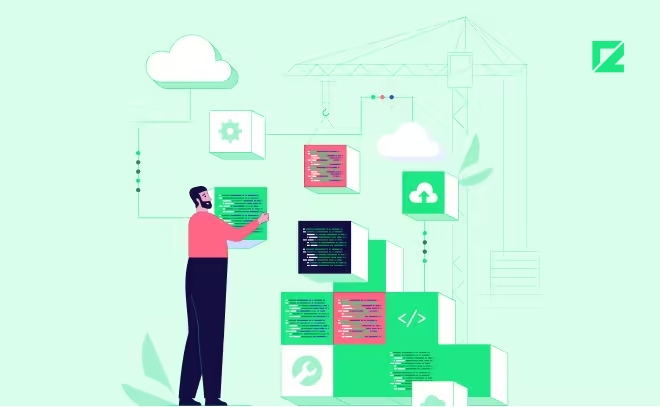
5 Game-Changing Technologies in the Future of Software Development

Introduction

Rapid technological progress has always been one of the defining characteristics of the software industry. With every step forward in the industry, developers and organizations have to be a step ahead of the curve through innovations. This article will discuss five emerging trends and technologies shaping the future of software development, changing the way we construct and deploy our software.

Top Innovative Technologies Driving the Future of Software Development

AI and Machine Learning in Software Development : AI and ML have initiated the revolution in the process followed in developing software; this is bound to extend even further. AI is no longer confined to some use case such as in a chatbot or just an automation tool integrated into every phase from code generation, to testing, and deployment.

Some of the most outstanding advances include AI-powered code completion tools, like GitHub’s Copilot, which supports developers by providing code snippets relevant to the current context. These tools not only speed up the development process but also enhance the quality of the code, hence lowering human errors. AI and ML further enhance the testing of software, as it can generate the test cases and help code self-healing.

Software development in the future will remain ever-changing with AI being increasingly used in DevOps pipelines for continuous integration and continuous deployment, thereby ensuring that software changes its contexts within dynamic environments with minimal direct human interference.

Low-Code and No-Code Platforms: Today, low-code and no-code platforms have received significant popularity amid the greater demand for faster development cycles, and also due to the scarcity of skilled developers. These platforms have given users without any knowledge in programming a chance to design applications via the intuitive interfaces of drag and drop.

Low-code platforms help accelerate the speed of development while reducing its costs; thus, accelerating business change as businesses increasingly push for digital transformation. In industries in which speed to market is a competitive advantage, low-code platforms enable rapid prototyping and agile development.

In the next few years, an even more democratized future of software development can perhaps emerge, where applications can be contributed to and made, not just by developers, but also by many others. However, skilled developers would be playing the important role of tailoring, scaling, and security for such applications in complex enterprise environments.

Cloud Computing, Serverless Architecture: Cloud computing remains the driving force behind software development. The shift toward remote work and globalization brought along with it cloud-native applications, the shining light at the end of the tunnel. Scalability, flexibility, and cost efficiency are the main reasons developers are increasingly adopting cloud platforms like AWS, Microsoft Azure, and Google Cloud.

Among the major trends in this space is serverless architecture. Serverless computing allows application developers to develop and deploy their applications with no need to know the underlying infrastructure. This model makes operations less complicated, so that the developers’ job is to focus entirely on writing code, as services like AWS Lambda manage all aspects of scaling and resource management.

Future applications will come from serverless architecture, along with microservices. It will unlock full software development where developers can do application development in modular and lightweight pieces of software that can be scaled individually.

Evolution of DevOps and Continuous Integration: Indeed, the adoption of the culture and practices of DevOps has altered the way teams work together and deliver software fast, with higher reliability. The crossroads of AI and machine learning seem poised to continue evolving DevOps in a couple of years ahead.

Continuous integration and delivery will continue to rise toward the intelligent pipeline, in which monitoring, testing, and deployment are all fully automatic. AI-driven analytics will track things like bottlenecks and predict potential issues even before they occur, thereby avoiding them and significantly reducing downtime. Overall software quality will increase.

Moreover, IaC will continue to evolve to let developers develop and manage infrastructure through code, further streamlining the development flow. This trend will provide a future landscape where DevOps is an essential component of software development.

Quantum Computing: New Frontier: Among the most exciting emerging technologies that would hopefully redefine the future of software, quantum computing is certainly in one of the top spots in that queue. Although still in its infancy, this is an area promising to solve certain complex problems that are so complex that cannot be approached by today’s classical computers.

Quantum algorithms may revolutionize many applications in software developments-cryptography, optimization problems, and AI training. Quantum computing will be able to do massive parallel calculations that could bring new possibilities to areas like drug discovery, financial modeling, and material science.

It is still a few years away from the integration of quantum computing into mainstream life, but developers should be made aware of the latest updates on its development and application. As quantum hardware and software advance toward maturity, new development tools and platforms focused on quantum capabilities may come along the way.

Conclusion

The future of software development is exciting with emerging technologies and trends that promise to transform how we create, test, and deploy it. From the perspective of complexity, AI and machine learning will take out most day-to-day development hassles, while low-code platforms democratize the space – making development available to non-technical users. Operations are likely to continue to become easier with cloud computing and serverless architecture as DevOps evolves to integrate smarter automation tools.

Quantum computing is on the horizon as something of a game-changer, pushing boundaries in just what is possible with software. Developers and organizations here need to be looking closely at these trends and prepared to adapt and innovate in response as the industry continues to mature.

By embracing these technologies now, you’ll be well-positioned for success in the future of software development.

More Blog: DevOps Security and Compliance: 7 Best Practices for Modern Organizations

7 Strategies for Building a Culture of Innovation in Software Development Teams

Software development team collaborating to foster a culture of innovation in their projects

Introduction

Culture of innovation is essential for software development teams to stay ahead in a fast-paced technology landscape In an era of fast-paced technology, software development teams are no longer in a quest for merely technical expertise to stay ahead of the game. Innovation drives a good software solution, bringing means to resolve complex problems, fulfill customer’s high expectations, and adapt to the constantly changing marketplace. However, creating an innovation culture is more than overnight magic; it requires intentional strategies that empower developers and facilitate creativity among a team.

We would discuss seven strategies that help a software development team evolve an innovation culture. These techniques would unlock the potential of teams and help them deliver breakthrough solutions consistently.

Ways to Inspire Creativity and Innovation in Software Development Teams

Nurturing a Growth Mindset to Foster Innovation in Software Development: A culture of innovation begins with the mindset. Software developers have to be taken to challenges where new ideas can be tried out and failures learned from.
A Growth Mindset is creative, encouraging continual improvement.

  1. Grant credibility and motivation to try out things, even when they collapse.
  2. Motivate the developers to take in feedback and learn from their mistakes.
  3. Training and provision of new skills and technology.
  4. Then, challenges will be viewed by teams as excellent opportunities for learning, and they will welcome new ideas and solutions.

Encourage Interdisciplinary Teamwork for Creative Solutions: The environment that supports innovation is where different ideas and perspectives are brought together. Here, teamwork is between developers, designers, product managers, and other stakeholders related to the work. It promotes creative problem solving as well as new ideas.

  1. Use agile frameworks such as Scrum or SAFe to encourage cross-functional work.
  2. Hold brainstorming often across departments.
  3. Open up shared mechanisms, such as internal wikis or CoPs.

When teams collaborate effectively, ideas that might not emerge through individual effort can surface, enhancing their collective inventive ability.

Grant Autonomy to Teams to Boost Innovative Thinking: When developers are granted the freedom to explore ideas and test solutions, they enjoy their autonomy. This has the impact of making team members own the results from their contributions, thus bringing innovative outcomes.

  1. Use self-organizing teams to manage workload and allocate decision-making responsibilities.
  2. Empower developers to choose the tools, frameworks or libraries they want to use in the project.
  3. Micromanaging should be avoided, trusting that the team will deliver.
  4. Autonomy does not only give rise to innovation but also good morale and productivity for a team, and therefore, developing an ownership and innovation-generative culture.

Provide a Safe Ground for Experimentation and Risk-Taking: Not every idea will work, and that is okay. A climate of innovation will require a trusted team that can experiment in an environment where the failures are not held against them. Innovation thrives off trial and error-and generally, off the mistakes along the way as one learns.

  1. Celebrate failures and lessons learned through successful experiments.
  2. Develop innovation sprints or hackathons to try new ideas.
  3. Reduce the fear of repercussions to encourage risk.
  4. When teams feel free to experiment, they make more substantial bold moves, which then leads to meaningful innovations.

Integrate Innovation into Agile Processes: Agile methodologies provide a dynamic framework for innovation strategies within software development workflows. Retrospectives and frequent sprints can outline areas of change and creative solution-implementing actions.

  1. Use retrospectives to reflect on what worked and what didn’t.
  2. Implement design thinking workshops to brainstorm innovative features.
  3. Provide time in sprints to try out the proof-of-concepts and any type of research.
  4. Agile processes enable a rapid pivot and test innovative concepts within an agile team in the most efficient way possible.

Promote Continuous Learning and Development: An innovation culture ensures that developers are up to date with the latest tools, technologies, and rapidly evolving industries. Continuous learning enables the teams to innovate by increasing their technical knowledge and enhancing the ability to solve problems effectively.

  1. Train on new and emerging technologies through workshops, certifications or online courses.
  2. Participate in conferences, webinars, and tech meetups.
  3. Provide mentorship programs to enhance skill development and innovation.
  4. Keeping developers abreast of the latest developments in the industry will help them introduce innovative solutions that can give the organization a competitive edge.

Recognize and Reward Innovation in Software Development Teams: For any form of innovation in an organization, there is always the requirement to recognize and reward the developers involved. Recognition and reward systems of innovation will motivate developers to come up with unique and innovative solutions.

Advance and reward innovation to motivate the members to develop creative thinking and find new ideas. A recognition system that highlights innovative input instills the power of innovation in the culture of development.

  1. Provide a peer-to-peer recognition mechanism for innovative ideas.
  2. Establish rewards or incentive schemes through creative problem solving.
  3. Celebrating innovative solutions publicly via all-hands meetings or newsletters.
  4. Recognition serves to inspire the individual, creating motivation in oneself and inspires others to be significantly active in pushing the innovation culture so that it can succeed within the team.

Conclusion

With a competitive market demanding cutting-edge solutions, a culture of innovation needs to be constructed within software development teams. Organizations can therefore cultivate an environment where creativity thrives by developing an overall growth mentality, encouraging teamwork, giving autonomy, and incorporating innovation in an agile process. Continuous learning and recognition enforce this culture, keeping developers motivated and involved.

It is the mandate of the senior team members to inspire and lead teams into an innovation culture. That is how when all the parts of your DNA induce innovation, all software solutions will be nudging the boundaries and leaving the rest in awe.

By embracing these 7 strategies, organizations can foster innovation in software development, empowering teams to consistently deliver creative solutions that meet evolving market demands.

More Blogs: Choosing the Right Technology for Your Web Development

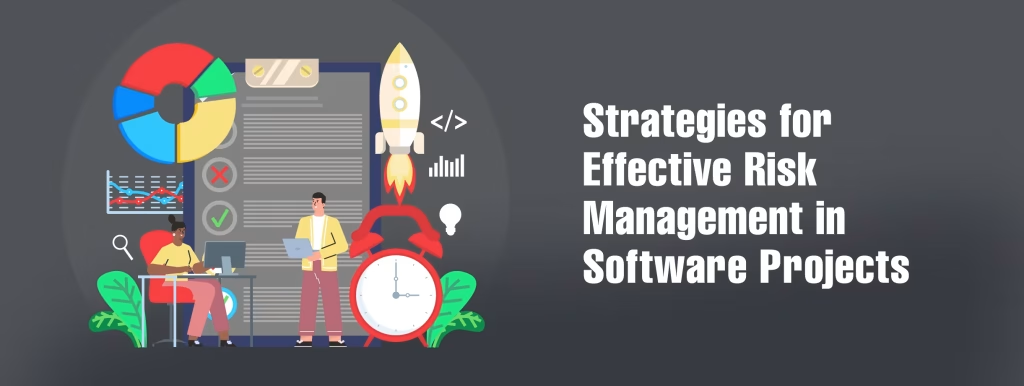
7 Proven Strategies for Effective Risk Management in Software Projects

Software project risk management strategies for developers

Introduction

As software systems get more complex, it becomes tough to ensure the smooth delivery of projects. Good management of risk will definitely avoid delays and make sure that an increased budget overrun is avoided, and products are developed with high quality. Actual risks must be identified by software teams from planning stages to after deployment. We’ll talk about seven tried and tested strategies senior developers and project managers can use to perform extremely well in this blog.

Managing Technical Debt in Software Project Risk Management

The most primary step in effective risk management should be to identify risks as early as possible in the project planning phase. It is well understood to note technical as well as business risks that may creep up. Third-party APIs are part of it. There can be unclear requirements too, which might disallow the process further in the development lifecycle of the software.

  1. Have brainstorming sessions with key stakeholders.
  2. Set up a risk registry to record and document potential risks and their impact.
  3. Applying scenario planning would provide potential failures.
  4. Earlier construction of contingency plans without disruption is possible through anticipative identification of risks.

Risk Mitigation Plan for Software Project Risk Management

Software development is dynamic, and agile frameworks, especially Scrum and Kanban are designed to manage changing risks. Agile frameworks give the facility of the risk constant across iterations. Project risks can be monitored and addressed in daily stand-ups, sprint reviews, and retrospectives.

  1. Create a backlog for identified risks and rank them.
  2. Use burn-down charts to track risk impacts
  3. Include product owners in the decision-making process
  4. Agile practices fit well into continuous delivery and allow development teams to respond fast to changing requirements or challenges

Emphasis of Communication and Transparency

One of the most common risks that arise when developing software is the break in communication, especially among the developers, testers, and stakeholders. Clear channels will ensure that identified risks and mitigation strategies reach all people in the team.

  1. Use real-time communication tools, such as Slack or Microsoft Teams
  2. Ensure the risk mitigation plan for the project is communicated across all the stakeholders involved in the project
  3. Create an openness culture to have a conversation about all risks
  4. Communicating in an open manner eliminates escalations because teams are ready to deal with commonly arising issues; hence, never escalate.

Managing Technical Debt in Software Project Risk Management

It can erode quickly if not managed well. So technical debt, when it is not taken care of, threatens to be a substantial risk to the success of a software project. It leads to poor code quality, increased development time, and reduced flexibility in the later iterations.

  1. Technical debt should be checked frequently through code reviews.
  2. Refactoring time must be planned for the sprint.
  3. Automated testing would help in catching problems early.
  4. Technical debt will not compromise future development cycles and, not impact delivery timelines once the code is clean and scalable.

Risk Mitigation Plan for Software Project Risk Management

A risk mitigation plan acts as an actionable basis for effective risk management. It describes how specified risks will be addressed and mitigated in case they occur. Each identified risk should have predetermined responses, and ownership assignment ought to be done to ensure rapid resolution.

  1. Use a risk matrix to classify risks according to severity and probability
  2. Identify owners for prioritized risks
  3. Review the risk mitigation plan regularly to ensure it remains updated
  4. Having a well-thought-out mitigation plan will help teams be better equipped to respond in advance to challenges and ensure that their software projects stay on track.

Project Governance for Monitoring Risks

Project governance frameworks provide a structured way of risk tracking and resolution. Governance ensures that risks are followed up upon for continued observation, and those identified should be escalated to decision-makers when appropriate.

  1. Regularly conduct project health assessments.
  2. Develop a risk review board for high-impact projects.
  3. Utilize tools that support project governance that can automate the tracking and alerts.
  4. If governance is in place, then the senior developers and project managers can be guaranteed that any potential risk identified will be caught and addressed at the early cycle stage.

Use of Tools and Automation in Software Project Risk Management

There are a number of tools and platforms that software teams can employ in tracking and mitigating the risks. This starts from the project management software like Jira, to automation frameworks that help identify, monitor, and close risks.

Find a way of integrating it with agile workflow when you use Jira for risk monitoring.

  1. To reduce deployment risks, use pipelines for continuous deliveries
  2. Use DevOps tools, which allow you to automate most of your repetitive activities and minimize human errors.
  3. Automation allows teams to focus on high-value work as they eliminate any hands-on work that could become a source of risks.

Conclusion

Risk management is the backbone of any good software project. Software teams can reduce the chances of disruptions occurring by identifying risks early and through correct adoption of agile practices along with usage of automation. Other factors contributing to long-term success in projects include building a culture of transparency as well as technology debt management.
This is why the efficient handling of risks throughout the entire lifecycle has come to be an important tool in the arms of senior developers and project managers for ensuring on-time and within-budget delivery of quality solutions. With these seven practical strategies for software development, your team remains proactive in ensuring smooth delivery and risk-free software development.

More Blogs: How Cloud Services Drive Efficient Software Development: 10 Key Insights

10 Proven Strategies to Scale Software Projects Effectively

Scaling software projects using cloud infrastructure for optimal performance

Introduction

Scaling software projects at scale is probably the most challenging job of a lead cloud engineer. In view of the increase in customer demands on a daily basis, projects being more complicated, one has to outshine the competition. Effective scaling in software projects has become indispensable. Here are 10 proven strategies that allow for seamless scalability, leveraging cloud infrastructure, automated tools, and agile methodologies.

Scalability using Cloud Infrastructure for Software Projects

The cloud gives enormous scope to scale software projects. Solutions based on the cloud give organizations the flexibility and scalability of a resource that is available on demand. Whether you are using AWS, Microsoft Azure, or Google Cloud, the cloud platforms ensure horizontal as well as vertical scaling of the applications. This ensures optimal performance even when your project is growing.

Agile Development for Flexibility

Agile development is the way to scale software projects. It allows adaptability and rapid responses to changes in scope or business requirements using an iterative approach. It encourages continuous delivery and collaboration between cross-functional teams, with no bottlenecks in your project to ensure it scales.

Focus on Modular Architecture

A modular architecture is necessary for the scaling of large software systems, as it is more possible to split up a project into even smaller, independent modules, or microservices, which can be developed separately and independently without affecting the whole system. This method enhances maintainability and flexibility and allows you to scale individual parts of the project according to user demand.

Automate Testing and Deployment Processes

Testing and deployment can be tedious and error-prone, especially with an increasing number of projects. Automating these processes becomes essential for efficiently managing and scaling projects. Implementing automation tools like Jenkins, Travis CI, or CircleCI will ensure faster releases with fewer errors, thus enhancing reliability in the growth of software.

Invest in Cloud-Based Monitoring and Analytics Tools

Monitoring becomes more important as your software project scales. Tools like New Relic, Datadog, and Prometheus will help you track performance in real time. Analytics gives insights into potential bottlenecks, consumption of resources, and user behavior, which thus makes it easier to either adjust the resources or tweak the software for enhanced performance at rising demand levels.

Overcome Scaling Challenges with Load Balancing

Scaling software projects inherently brings new challenges, such as increased traffic and the need to maintain performance. Load balancing is an effective solution, allowing traffic to be distributed across multiple servers to prevent system overload. In ensuring high availability and even performance as your software scales, there are really nice tools such as HAProxy, Nginx, and AWS Elastic Load Balancing.

Ensure Scalability with DevOps Integration

The practice of DevOps needs importance throughout the lifecycle for maintaining scalability. DevOps encourages the integration of dev and operations teams to ensure collaboration and continuous improvement. Some of the practices that include IaC, monitoring, and automated CI/CD pipelines must ensure that your infra scales with your software.

Code Optimization for Performance

As the software project grows, inefficiencies in code cause performance problems. Perform code review routinely and use performance analysis tools to detect bottlenecks or inefficiencies. This optimized code consumes resources the least. The response times increase and the software is able to meet all growing user demands.

Prepare for Scaling with Capacity Planning

Capacity planning accommodates the forecasting of future needs that your software will need. By projecting growth and performing load testing on your system, you can avoid unexpected outages or slowdowns. Engage in doing load testing at the start and revisit the capacity planning to ensure that your infrastructures can support your future growth.

Work Collaboratively Across Teams

Scaling software projects requires an effective collaboration between development, operations, product management and other stakeholders involved. Communication tools like Slack or Microsoft Teams could be set up alongside suitable project management platforms, for example, Jira or Trello, in order to keep all on the same page. Collaboration fosters innovation and avoids problems caused by scaling too hastily or inefficiently.

Conclusion

Scaling software projects most effectively requires a thoughtful approach that combines strategic planning with technology adoption and efficient collaboration. To achieve this, explore leveraging cloud infrastructure, process automation, and agile development-outlined below and importantly, embrace on the basis of the challenges to be met with from scaling your project. Anticipated performance, reliability, and also user satisfaction over the software will be guaranteed.

More Blogs : 7 Strategies for Building a Culture of Innovation in Software Development Teams

10 Reasons Quality Assurance Drives High-Quality Software Outcomes

Roles of Quality Assurance in ensuring high-quality software development

Introduction

In a software development market that is as cutthroat as this, delivering quality software ensures that the users get what you intend to give them, and therefore you are sure to have a firm ground in the market. In building software, while the development teams play their part, Quality Assurance is equally important as it ensures that the product meets both functional and non-functional requirements. QA goes beyond mere testing and is an integral strategic part of the software development life cycle: checking the product early helps find defects, increase reliability, and gain final user satisfaction. 

In today’s discussion, we’ll look at 10 key roles of Quality Assurance toward successful delivery of high-quality software.

Roles of Quality Assurance toward successful delivery of high-quality software.

Early Detection of Defects in Software: Early detection of software defects is a key role of Quality Assurance. Continuous testing and development ensure that bugs, glitches, or performance bottlenecks are detected well ahead of user-level exposure.

Why Does It Matter?

Early detection of defects not only reduces the cost of later fixes but also accelerates the release cycle. QA teams employ various forms of automated tools that help them test and identify defects continuously, thereby letting only high-quality code move toward production.

Building Software Reliability: Another important aspect that QA provides is the overall reliability of the software being developed. With it, the software can definitely be depended upon and will work as it is supposed to in any kind of condition, thereby bringing satisfaction and trust to the users. QA testing with extreme intensity is conducted to ensure each component of the software performs well when integrated thus performing well under heavier loads or complex environments.

Load testing and stress testing help determine how well the software performs when being subjected to large-scale data inputs or heavy user traffic. In this way, the software remains stable and reliable even at pressured times.

The Shift-Left Approach: In the development of new softwares, QA is no longer a true afterthought. The trend of shift left involves moving and integrating QA from the earlier stages of development. Therefore, testing begins on day one, allowing developers to address defects as they occur rather than waiting until the final stages of development.

Why This Matters?

Quality assurance is indeed an exercise that begins early, thereby reducing the possibility of an error from happening in the first place. Early testing is, therefore, an integral part of an overall scheme to deliver quality software faster.

Automating Software Testing: Manual testing is quite cumbersome and useless. Automated testing is a strategy adopted by the QA teams for the repetitive execution of tests in volume. Automation saves much time in execution as more test cases can be covered in less time.

Benefits of Automation

  1. Reduces Human Error in Testing
  2. Improves the cycle of feedback, and the developers can easily solve the problems quickly
  3. Supports broad consistency in automated testing of projects
  4. Tools: Selenium, JUnit, TestNG are some tools that are generally applied by QA teams to perform automatic testing.

Effective Intercommunication Across Teams: Quality assurance is an important component that assists teams in intercommunication that develop software. Being a link between the developers, operations, and the product team assures that everyone shares one idea of quality orientation and performance expectations.

Why Does It Matter?

QA and development teams should effectively communicate to avoid misinterpreting the requirements. It is more than likely that when the QA team clearly communicates with the development team, the risk of misunderstanding and failing to meet the final product will be reduced and end up serving the needs and expectations of the customer.

Testing Functionality and User Experience: Apart from bug detection, QA ensures that the software does behave in a manner it is expected to and does provide for a seamless user experience. A function test will ensure that the software performs according to its specification, whereas usability testing will ensure that the users can easily use the software.

Example: QA teams do end-to-end tests where they simulate the usage scenarios of real-world users to test software performance on different devices, platforms, and browsers.

Mitigating Risk and Reducing Downtime: A great QA process ensures that risks that are associated with the deployment of software are controlled by businesses. Identifying failure points in the system through QA teams is crucial to prevent costly outages or service interruptions.

Why This Matters?

For instance, in finance and healthcare, any industry relating most to the reliability of its software, managing risks through QA prevents outages and ensures uninterrupted service.

Preventing Security Vulnerabilities: As hackers’ activities have become increasingly common, software security testing has become an integral part of the QA process. The QA teams try to check for bugs with security vulnerabilities that involve weak authentication mechanisms and disclosure of sensitive information.

Why It Matters?

When a piece of software is considered safe, it helps the user as well as the organization by being safe from data breaches and the loss of confidential information.

Quality Metric Tracking and Measurement: The quality assurance team tracks key quality metrics such as defect density, test coverage, and time taken to close the issues in order to have continuous improvement.

Monitoring these metrics helps identify trends and bottlenecks in the development process. It ensures valuable insights can be applied to improve future iterations.

Why This Matters?

This allows businesses to develop their process to provide better software products in the next iteration.

Customer Delight and Retention End: Ultimately, what quality assurance seeks to deliver is a product that surpasses or meets the expectations of the customers. High-quality software leads to increased customer satisfaction, loyalty, and subsequently an improved business outcome. By ensuring the product is free of bugs and is secure, yet at the same time user-friendly, the long-term success of the product is the direct benefit of QA teams.

Example: Well-managed QA will ensure catching of most problems after the release to ensure delivery of the product that gives value and in which customers may actually have a chance to rely on it.

Conclusion:

In short words, quality assurance aims at catching bugs, ensuring that the software is working towards its objectives as expected and provides a simply excellent user experience. From early defect detection to automation, risk management, and security testing, QA plays the pivotal role of success in software products.

The integration of the above 10 important roles will help your team deliver quality-software releases within the market, satisfactory to the users-thereby leading to business success.

More Blogs : Key Factors to Consider When Choosing a QA Testing Partner

How Cloud Services Drive Efficient Software Development: 10 Key Insights

Cloud Services for Software Development

Introduction

With the onset of the Pandemic, businesses were quick to realize the opportunity to look forward to leveraging cloud services as a tool for efficiency, agility, and scalability in today’s fast-paced digital landscape. Cloud-based solutions allow distributed teams to streamline their processes, eliminate infrastructure costs, and become more effective in their collaboration.

However, a more pertinent aspect of this article is that it points out the following ten essential strategies of using cloud services that can help improve software development efficiency, making you ahead in competition and able to get back to clients within time and budget with the offered projects.

Leverage Cloud Services for Software Development Collaboration

One of the major benefits of using cloud services is team collaboration, especially in software development. Software development teams can work on the same project at the same time due to Google Cloud, AWS, and Microsoft Azure, which are cloud platforms. Slack, Jira, and Trello tools allow transparency, efficient communication, and good tracking of work in progress, management of tasks, and final delivery of project results within a schedule.

Cloud Services for Software Development: DevOps Integration

Cloud-based services change the pattern of how people will utilize DevOps services in their organizations. Cloud-based integration tools make it possible for the implementation of continuous integration and continuous deployment. Their practices of testing, deploying, and monitoring can be automated by DevOps pipelines through the cloud. The process saves time-to-market periods with quality standards being maintained. This involves services like AWS CodePipeline and Google Cloud Build, which generally reduce the cycles of a development process; hence, the practice is efficient to develop software.

Agile Development with Cloud Services for Software Development

Agility thrives when teams have flexible, scalable infrastructure supporting work, and cloud services prove to provide that. Ensuring that resources scale up or down according to project demands helps ensure development teams remain agile. This makes it possible for businesses to respond fast to changes in the market, customer needs, or project scope without delay or over-spending.

Use Cloud Infrastructure in Scopes of Scalability

Scalability is one of the major aspects in software development, mainly for projects that are expected to grow in size or complexity. Cloud infrastructure allows the scaling of computing power and storage according to the changes in the project. Cloud infrastructure would automatically be readjusted to support your own software whether Amazon EC2 or Microsoft Azure Virtual Machines or Google Compute Engine, thus eliminating downtime and giving consistent performance.

Cloud Services – Cost Effective

Budget management in software development projects is a big concern for any project manager. With cloud services, it becomes irrelevant to spend a lot on front-end hardware because they can pay for what they use. Their model is pay-as-you-go and has proven very effective for managing costs, especially the smaller start-ups or companies that scale pretty fast. However AWS and Microsoft Azure are examples of cloud services. They provide tools for cost analysis in order to help teams predict and manage costs as well.

Automated Backups and Disaster Recovery

Redundancy and disaster recovery on data are built right into the cloud platforms. Because of this, you do not have to lose any data when developing your software project through a cloud provider. Automated backup systems provided with Google Storage from cloud-based programs, AWS S3, and more give you version control and automatically recover critical files in case of an outage or system failure. Through this, teams can continue to be productive with little to no downtime based on unexpected events.

Better Security and Compliance

Security that can keep pace with increasing cyber threats in the present world is one of the major aspects of safety for software projects. Cloud-based services offer enterprise-grade security, including encryption, identity and access management, and automated threat detection. Platforms like AWS, Azure, and Google Cloud comply with international standards such as ISO 27001, GDPR, and HIPAA, so your software is developed to industry standards and safeguards sensitive data.

Cloud Services for Software Development: Testing and QA

Testing large scale software development projects is very expensive and error-prone if done manually. Nowadays, firms like Sauce Labs, BrowserStack, and AWS Device Farm provide ease to the developers as they can test their software on various environments and devices. On a cloud platform, automated testing, regression testing, and performance testing can be done easily, which further accelerates the development process and enables better quality of software.

Centralized Project Management and Documentation

Cloud-based tools allow teams to remain organized and focused on the core deliverables. Tools like Asana, Confluence, and Monday.com ensure that centralized documentation, management of tasks, and reporting are done in such a way that access to up-to-date information about the project will be possible by any team member involved. This type of centralization ensures accountability and aligns everyone involved throughout the development lifecycle.

Continuous Monitoring and Optimization

A powerful tool for the efficient development of software is the monitoring and analytics capabilities of Cloud services. Among them are AWS CloudWatch from AWS, Azure Monitor from Azure, and Google Stackdriver from Google,  which can provide real-time monitoring of the performance of software applications so that bottlenecks or inefficiencies caught early enough become major issues. Continuous resources, performance, as well as user behavior monitoring, enables development teams to make data-driven decisions to optimize their applications and improve overall efficiency.

Conclusion

In today’s competitive atmosphere, utilizing cloud services for software development is no more a luxury but a necessity. There is extensive enhancement of collaboration with cost optimization while ensuring scalability and strengthening security by using cloud services that provide all these utilities and platforms in order to streamline the process of development.

Embracing cloud technology allows you to effectively lead and control development projects towards successful delivery in terms of time, budgets, and quality output. The discussed 10 strategies can be used to benefit from a maximum use of the services offered by cloud and make your project successful.

Along with the adoption of DevOps, agile methodologies, or even security enhancement, improvement comes to a cloud service regarding better productivity and scalability not only of the team in general but also their efficiency in delivering software development. Finally, the best way to keep up with the competitive edge and keep pace with the ever-evolving demands of modern software development is to harness the power of cloud services.

More Blogs : Serverless Computing: Top 5 Scenarios and Effective Implementation Tips

5 Strategies for Efficient Communication in Remote Software Teams

Efficient communication in remote software teams

Introduction

Efficient communication in remote software teams is essential, Remote work has become prevalent today, and communication is the most important aspect that any effective remote software team must possess. As a matter of fact, face-to-face interactions have been eradicated in a completely remote set-up; however, the method of communication poses as a unique challenge for remote teams-the way it is executed can actually consume your productivity, efficiency, and morale if mishandled. Mastering efficient communication in remote software teams helps prevent misunderstandings, keeps projects on track, and strengthens team collaboration.

Overcoming the Challenges of Remote Collaboration

A remote team usually operates across different time zones and working environments. All this geographical distance can create several gaps in communication and delayed responses, misunderstandings due to unclear guidelines. In case such teams cannot fasten their agreements among themselves regarding work, projects may get derailed. So, a clear communication strategy is necessary that would prevent these kinds of issues by ensuring whoever is working within the remote team is always on the same page, regardless of the location.

Tools for Effective Communication

The right tools are a catalyst for efficient communication in remote software teams for software development. Video conferencing tools include Zoom and Microsoft Teams, wherein real-time live conversations can be held; instant messaging tools, which come in handy for fast communication, include Slack; and project management tools, such as Trello or Jira, that help update everyone regarding the status of every project, including their responsibilities. Aside from this, asynchronous communication tools such as Loom or email keep the team in sync across time zones by providing responses without the pressure of needing an immediate reply​.Selecting the right tools also depends on team size, project complexity, and whether tasks require synchronous or asynchronous communication.

Clear Communication Protocols

Formal communication creates a platform on which there is no likelihood of conflict; it brings in defined guidelines on communication platforms, response time, and meeting schedules. For instance, you could set regular check-ins or daily stand-ups to ensure efficient communication in remote software teams and make sure everyone’s priorities and updates are in line. A centralized hub for important information, such as a shared knowledge base (e.g., Notion or Confluence), would provide all team members with ready access to resources​

Building Transparency and Trustworthiness

Transparency and openness can bring trust to remote teams. Working on transparency – whether in the project status or feedback conversations – ensures profound bonding between a member and other team members. Leaders must develop an environment wherein employees feel free to share their ideas and concerns. Involving members in direct check-ins would provide sufficient time to address anything that could become unmanageable as early as possible and make sure everyone has a chance to be heard.

Encouraging Team Involvement and Cooperation

There is much more than just formal communication to conquer the team cohesiveness in a virtual working environment. Online trivia games and even virtual coffee breaks help efficient communication in remote software teams by boosting engagement and connections. Balancing formal communication with informal touchpoints has great effects on their engagement because it makes remote teams feel much connected.Simple gestures like celebrating virtual milestones or recognizing individual contributions help reinforce efficient communication in remote software teams.

Conclusion

Clear, simple communication is the foundation upon which an efficient, high-performing remote software team stands. Communication is difficult when teams are separated by distance; however, appropriate tools, clear protocols of communication, transparency, and engagement enable this kind of cohesion and productivity. Then, these strategies work to great effect in the long term, as is expected in the constantly changing world of remote software development.

More Blogs: 8 Essential Soft Skills for Junior Developers in 2025

Best Practices for Onboarding New Clients in Software Consulting

Consultant welcoming a new client to a software consulting project

Introduction

In today’s digital world, software consulting emphasizes the importance of ensuring that the final product is bug-free and free from errors. Onboarding is more than an introduction-it’s actually the foundation for a productive, long-term relationship with your client. Good onboarding ensures that you are aligned with your client as far as project goals and expectations, as well as how communication will be done, on both sides. This blog is all about the best practices on how to onboard a new client for software consulting, ensuring that the relationship gets off to the right and productive foot.

Begin with a Thorough Kickoff Meeting

The kickoff meeting is the first and most important step in onboarding a new client. This will form the basis of your formal introduction to the client’s stakeholders and your consulting team. It is used to go over the scope of the project, set expectations, and outline the roles of both parties.

Discuss the timeline, deliverables and potential challenges that might arise within the kickoff meeting. Make sure your objectives align with the client’s business objectives to ensure that everyone is singing from the same hymnbook right at the start. This can also accompany building trust, as it openly shows that your team is prepared and committed to your client’s success.

Define Roles and Responsibilities in Software Consulting Projects

There is a high risk of unidentified issues concerning the responsibilities and roles associated with client onboarding. Yours and the client’s team should be clear about their duties in the project. The main uncertainty that could arise in such arrangements is in defining who will look after the task of project management, communication, technical decisions, and approval.

It ensures that no confusion or overlap occurs in the project. Such a responsibility matrix is very critical, especially on Consulting for software projects involving multiple stakeholders and departments.

Communication Plan

Good communication is an essential ingredient in the success of any consulting project. It is important that all parties are included in a clear communication plan at the outset which details how, when, and through what means communication will occur between regular check-ins, status reports, and even feedback sessions.

Agree on a tool of preference for communication and agree on the update interval- whether it’s weekly or bi-weekly. This pre-agreeing can ensure that your team and the client will always be updated with regard to the progress of the project.

Getting All the Needed Information from the Client

Before diving into the technical details of the project, it’s extremely important to gather information from the client. This will consist of any project documentation, user requirements, or existing technical infrastructure or systems that he or she may already have in place. For some more complex projects, this may even need a discovery phase.

Do your homework to understand the client’s business model, target audience, and pain points. This will help guide your consultation approach and ensure that what you propose meets the needs of the client.

Set Clear Milestones and Deliverables in Software Consulting

It is the defining and setting milestones along with deliverables that become the prime controlling factor in dealing with client expectations for a successful project. Break it down into manageable phases with well-defined specific goals and tasks to be covered during every one of those phases; make sure the client is properly briefed on what will be expected at each milestone of when results will be achieved.

Creating a project timeline with deadlines for the creation of every deliverable keeps the project on track and also enables monitoring of the way work progresses over time. The possible risks or roadblocks, which might interfere with the said timeline, should also be taken into account and disclosed to the client, in a manner whereby, even during these contingencies, they will know what to expect.

Provide Detailed Scope of Work (SOW)

The scope of work must be a clear document that formalizes the objectives, deliverables, and timelines of the project. It should also include the budget, terms for payment, and any other resource pertinent to the delivery of the project.

A SOW is a contract between you and the client to ensure alignment on what is going to be delivered and at what cost. It is what avoids scope creep, although quite ironically, the very cause of those nasty delays and budget overruns.

Train the Client on Your Processes and Tools in Software Consulting

Each Software consulting service firm has its own internal processes and tools that it uses to manage projects and their software development. You have to train the client on how your team works-or really, the methodologies (like Agile or Scrum) and the tools you are going to use in the life cycle of the project.

Give the client access to whatever tools, be it Jira or Trello, and explain how they will be involved within the process- probably reviewing progress, submitting feedback, and approving deliverables.

Building a Strong Relationship with the Client

It’s not just a matter of technical competence, but actually has to do with trust and collaboration when you have a relationship with a client. The onboarding process should enable you to take your time to understand their business culture and values, thus being able to tailor your approach for their unique needs and preferences.

Regularly check in with the client to ensure he is satisfied with how things are going and let him know of any concerns as they come up. Through active communication and collaboration, you establish a strong partnership that will be made to last beyond the singular project.

Give Out a Clear Roadmap for the Project

A project roadmap is, for all intents and purposes, a visualization of the project timeline, its milestones, and the delivery of key deliverables. Providing a clear roadmap to a client lets them understand how the project will flow and what to expect at every stage. This will give the client the confidence that the project is unfolding according to plan.

The current state of the project roadmap is to be updated at all stages and shared with the client so that the client stays aware of the progress and is aligned with it.

Offer Ongoing Support and Maintenance

Getting a client aboard does not end with the launch of the project. Offering ongoing support and maintenance goes with the times of building long-lasting relationships with clients. After delivering a software solution, get options for support available for them, whether it is troubleshooting or the update and enhancement of features.

It reflects that your consulting team is concerned with the success of the client even beyond a project.

Conclusion

Successful Client onboarding in software consulting is achieved only through careful planning and clear communication that takes a client-centric approach. It starts by following these best practices-offering the backing of an excellent kickoff meeting, clear expectations, and open lines of communication-which will form the foundation for a successful project and long-term relationship with a client. Remember, however: the just-mentioned client onboarding is not an event but the start of a partnership, one which may, with time, open up future growth opportunities.

More Blogs : Boost Forecast Accuracy: 7 Essential AI-Powered Business Analytics Tools

10 Best Practices in Software Development for High-Quality Code & Agile Teams

Best practices in software development

Table of Contents

Introduction

Software development is at the heart of modern business. By understanding and implementing best practices in software development, teams can avoid common mistakes and accelerate project delivery. Pressure for companies to produce software that is of high standard and out quickly has called for a strict need to adhere to best practices in software development. Best practices allow teams to streamline their processes, reduce errors, and ensure robust, scalable software delivery. Experience good best practices in developing software by learning from the rest of this blog post. Improve the work and results of your team so you can stand out as one of the best.

Prioritize Code Quality: Essential Best Practices in Software Development: Basically, it simply means clean, maintainable code. Code quality is more than just getting the software to work-about ensuring that the code is readable, modifiable, and scalable. Toward these ends, developers should try their best for simplicity and avoid overcomplication of the code. Coding standard follows: always consistent naming conventions, clear comments, and well-structured functions that help understand code better and maintain it easily.

Codes can be kept in the style guides such as Google, Airbnb, or any other which releases into making their teammates keep the consistency while everyone implements the same practices.

Implement Agile Development: Key Best Practices in Software Development: Agile methodology has become the new gold standard in software development for good reason. Agile practice encourages flexibility, collaboration, and continuous improvement. With Agile methods, development teams can focus on delivering small, working increments of software more frequently by breaking projects into smaller, manageable sprints. This will make it faster and result in better risk management compared with the traditional approach, thereby increasing flexibility toward changing requirements.

In addition to the above, some of the other key practices that ensure the alignment and continuous improvement during the lifecycle of the project include daily standups, sprint reviews, and retrospectives.

Version Control is Essential: A Best Practice in Software Development: Version control is one of the best practices a software developer cannot avoid. In fact, such a system – Git being only one example – helps a developer track changes within his codebase, effectively work with other team members, and roll back to some earlier version if things go wrong. This way, teams avoid code conflicts and can start working on different features or bug fixes at the same time without interfering with each other’s work.

On the other hand, version control, apart from providing robust code reviews and monitoring any change on the software and recording these along with traces.

Test-Driven Development: Test-Driven Development, or TDD, is a best practice in software development where tests are written before the actual code. This approach ensures that every feature or function is verified from the start, reducing bugs and improving confidence in software quality. Developers focus on writing tests first, which encourages them to think about functionality and potential edge cases early in the development process.

Additionally, TDD promotes more modular code that is easier to maintain. Because code is always written with testing in mind, it becomes simpler to refactor and extend over time, making it one of the most effective best practices in software development for producing reliable, high-quality software.

Automate Testing and Deployment: Best Practices in Software Development: Manual testing is time-consuming and prone to errors. One of the most important best practices in software development is to adopt automated testing combined with CI/CD pipelines. Tools like Selenium for web applications or JUnit for Java allow teams to run tests automatically whenever changes are made to the codebase, ensuring consistency and reliability.

CI/CD pipelines enable code changes to be automatically tested, integrated, and deployed to production environments quickly and safely. Following these best practices in software development reduces the risk of errors reaching live environments, accelerates the release cycle, and helps teams maintain high-quality software with minimal manual intervention.

Automated testing is one of the most important best practices in software development for maintaining code quality and speeding up releases.

Document Everything: Proper documentation: This is one of the more neglected best practices in software development. Although this may not seem to be a big deal at times, especially when rushing to deliver features, documentation stands as the key to long-term success. Good documentation helps in the speedy onboarding of new members of the team and allows developers to understand code better, which in turn means retaining knowledge around the organization.

There are two ways of focusing on documentation:

Code Documentation: Explainable code, explaining how the code works, what each function does, and what parameters it expects.

Project Documentation: Overview of a project at the high level including architecture, dependencies, and key workflows.

Regular Code Review: Best Practices in Software Development for Team Efficiency: Code reviews are an important step towards maintaining software quality. You can then spot some potential problems in code at an early date and improve overall code quality as well as share knowledge inside the team. Code reviews also help teamwork ensure that best practices apply at every stage of the process.

Tools like GitHub and GitLab natively support code review, which has always become easy to integrate for teams into the workflow of their development processes.

Security Emphasis from Early Stages: Never should security in the development of software be an afterthought. It can minimize the potential of problems into a risk that is controllable and manageable if security best practices are put in place early in the life cycle of development. From a secure coding practice to validating input, handling sensitive data, even going as far as frequent security audits-this should not include just a mere afterthought.

To ensure your application is protected against any cyber threat, you can identify vulnerabilities ahead of going live for that particular software using penetration testing or static code analysis tools.

Code Optimization: With increased complexity in software systems, performance optimization is getting more important day by day. Regular monitoring and optimization of the performance of applications from teams would ensure that user expectations are met. This includes code profiling optimization for identifying bottlenecks, optimization of database queries, and taking sufficient measures to handle heavy resources used for performing specific tasks.

Among these techniques, caching, load balancing, and lazy loading are some of the ones that will speed up performance, hence making software or applications run pretty smoothly.

Continuous Learning and Improvement: The landscape for software development is very dynamic and constantly presents new tools, frameworks, and best practices. Teams should adopt a culture of continuous learning and improvement. Ensuring the skills of the team remain fresh and relevant is thus made possible by keeping developers abreast of current trends, participating in their training activities or attending any conferences/webinars.

Through retrospectives, identifying good points for improvement for the development process regularly makes teams always aim at being excellent.

Conclusion

Best practices in software development are of utmost importance in delivering quality software which will answer the business goals and, at the same time, user expectations. Prioritizing clean code, agile methodologies, testing, and deployment automation, as well as security, just makes a development team work more efficiently and effectively. While best practices avoid mistakes and minimize technical debt at the same time, they also ensure the software is scalable, maintainable, and ready for the future. By following these best practices in software development, teams can improve code quality, enhance collaboration, and deliver software faster and more effectively

More Blog: Next.js vs. React.js: Choosing the Right Framework/ Library for Your Project 

  • Copyright © 2026 codelynks.com. All rights reserved.

  • Terms of Use | Privacy Policy