
Explore The Post
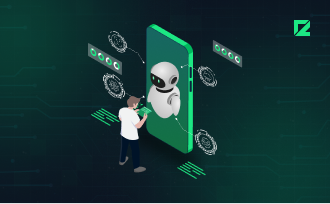
As customer expectations change with every passing day, there is always innovation in how to better communicate the message to the customers. One such revolutionary change in this space is the integration of Augmented Reality (AR) and Artificial Intelligence (AI) in Customer Experience. Together, AR and AI can help companies create data-driven, personalized, and immersive experiences that can increase the brand’s presence and foster loyalty among its customers.
Here, we’ll discuss five integral ways the combination of AR and AI in Customer Experience is revolutionizing customer interaction, backed by real-life case studies and expert insights from the field.
Personalized Shopping Experiences
The future of the retail industry is bringing a revolution with Augmented Reality (AR) and Artificial Intelligence (AI) in Customer Experience. The blend of AR and AI has changed how retail customers perceive their products. AI-powered recommendation engines create personalized shopping experiences while working closely with AR visualization tools that seem tailor-made for every user.
Case Study: Sephora Virtual Artist:
The virtual makeup try-on feature through the mobile application has seen Sephora successfully integrate AR and AI in Customer Experience into their systems. This means that AI analyzes skin tones and preferences as customers see virtually how different products will look on their skin in real time using AR. This reduces return rates while users achieve higher satisfaction levels because they can make more informed purchase decisions.
Security Concerns: Such an enormous amount of customer data requires strong privacy measures, encryption, and adherence to data protection laws like GDPR. The integrity of the AI algorithms and AR platform must also be guaranteed to prevent breaches that could compromise customer trust.
Enhancing Customer Support with Value-added Goods/Services with AR and AI
AI-powered chatbots and virtual assistants, combined with AR, makes for a seamless support experience with customers. Through these solutions, businesses would automate routine customer queries while providing visual, step-by-step aid using AR.
Case Study: IKEA Place and AR Support
For example, IKEA allows customers to place furniture in their homes through augmented reality (AR) and AI in Customer Experience before making a purchase. This enables users to check the size and style of the furniture prior to buying. The app, enhanced with AI, learns user preferences and subsequently provides tailored suggestions on what to purchase. By improving the customer experience with AR and AI, the service also guides customers in assembling the item, turning what could have been a frustrating process into an interactive and engaging experience.
Security Issues: The AI-based customer service system contains considerable personal data, making security a critical concern in AR and AI in Customer Experience. To ensure protection, it is essential to prevent unauthorized access and cyber-attacks, enabling secure communication between AI systems and users. Therefore, multi-factor authentication (MFA) and robust data encryption should form integral components of any AR and AI-powered customer experience system.

Immersive Brand Experience through AR and AI
AR and AI in Customer Experience together are redefining campaign marketing. Brands can generate experiential outreach that captures customer attention in innovative ways. With AI, customer behavior and preferences are analyzed, enabling highly targeted campaigns, while AR creates memorable and immersive interactions for users.
Case Study: The AR Marketing Campaign of Coca-Cola
Coca-Cola leveraged the application of AR and AI in Customer Experience to provide an interactive marketing experience for users. Customers could use a limited-edition can to unlock virtual games and experiences. AI analyzed patterns of user interaction to refine the campaign, enhancing consumer engagement and interaction. By linking AR with AI, Coca-Cola achieved significant increases in brand awareness and customer experience.
Security Risks : Increased integration of AR and AI in Customer Experience into marketing means there’s an open door to cybersecurity risks such as leaking data, phishing attacks through malicious AR applications, or hacking of the AI model. Hence, organizations need to invest in strong security measures such as penetration testing and also in managing secure APIs, be it for their brand or a product related to their customer’s data.

Product Development and Testing Process Simplified
The product development process has greatly been streamlined with AR and AI in Customer Experience.. On the one hand, AI analytics provide insights into user preferences and behavior, while on the other, AR enables companies to create virtual prototypes and conduct user testing scenarios without the need for physical products.
Case Study: Nike using AR in shoe design
Nike uses AR and AI in Customer Experience to support the product development cycle. With the use of AR, the designers view 3D prototypes of shoes. It can be dynamically changed. The AI makes predictions regarding what the customer may prefer and is based on historical sales data and trends. As a result of this process, the development timelines are reduced while improving how accurately these companies can predict the customers’ demand.
Security Concerns: Proprietary information needs to be safeguarded for organizations using AR and AI in Customer Experience for product development. Malicious parties should be kept at bay from AI and AR systems. Therefore, protecting those systems from industrial espionage and intellectual property theft is a challenge. There must be end-to-end encryption as well as secure DevSecOps for safeguarding a product pipeline.

Data Insights for Experience using AI-Powered
Probably one of the more significant benefits of using AR and AI in Customer Experience is the ability to compile a lot of interaction data of customers. From this, AI can provide actionable insights that companies might be able to use continuously to refine and optimize AR experiences for better engagement and conversion rates.
Case Study: BMW’s AR Configurator
BMW has an AR and AI in Customer Experiencecar configurator through which users can design their automobiles themselves with the help of augmented reality in real time. AI analyzes preferences to give specific color schemes, features, and accessory recommendations. The use of AI would allow for tailored experiences for every user and, therefore, more satisfied customers and higher conversion rates for BMW.
Security issues: The collection and analysis of user interaction through AR and AI in Customer Experience raise significant security concerns. Data integrity has to be assured, storage secured and user data anonymized to protect customers from breaches or misuse by companies.

Conclusion:
Unlocking AR and AI Potential
By combining AR and AI in Customer Experience,, new avenues are opening for customers to achieve unmatched improvements in life in any given industry. From one’s personalized shopping to immersive brand engagement, AI and AR are already raising the bar on the standard of interactions between a business and its customers. A delicate balance, however, is necessary, with cybersecurity robust powers to prevent hacking into people’s user data.
As a cybersecurity and AI-driven technology services firm, Codelynks customizes solutions to ensure that the AR and AI in Customer Experience systems in question are secure, compliant, and innovative. Through their help, businesses can unlock all the potential of AR and AI without being compromised or violating security and privacy.
Similar links : Personalized Shopping with AR: 5 Ways It’s Transforming Retail Experiences