
Contents Overview
Introduction
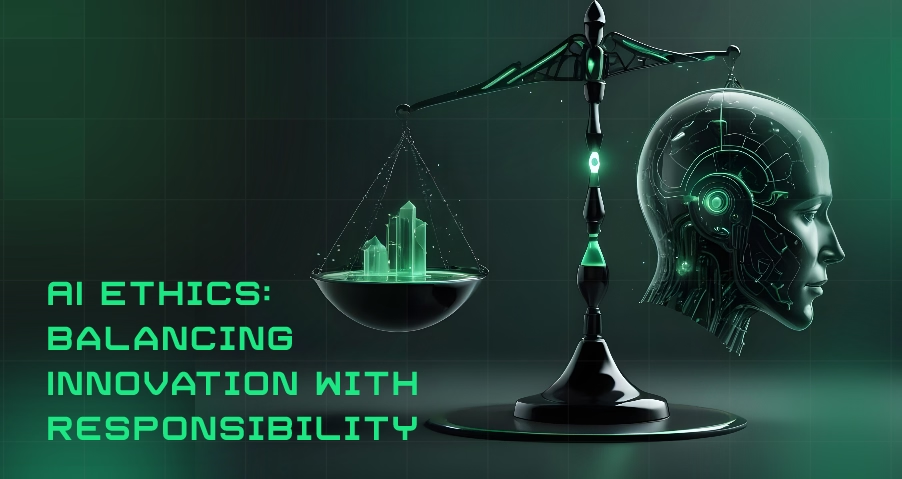
Responsible AI, with the inclusion of AI in modern technology, it has become a challenge to develop innovation within AI systems that are innovative yet ethical. Now, just as magnificent as AI technology can be with innovation across various industries, there are some risks to which one has to manage the proper resolution. From biased algorithms to the loss of privacy, even the construction of ethical AI requires maximizing benefits and thus minimizing harm in a delicate balancing act. This opens up to show how organizations can create ethical AI within the risks of rapid innovation.
Why Ethical AI Matters
AI systems are increasingly penetrating decision-making processes affecting people’s lives, from healthcare diagnoses and loan approvals to even criminal justice processes. And as these technologies begin to shape the future, their ethical use assumes an even more important role. Ethical AI is therefore the development of transparent systems free of bias, where human rights and privacy, for example, are respected.
If indeed no ethical considerations were involved in AI, for instance, the party responsible may perpetually be biased, invading privacy and exacerbating inequalities. For instance, if an AI algorithm is trained using biased data and discriminates against certain demographic groups, an outcome may be produced that’s most certainly unfair. Therefore, it is very important to have AI systems with some sort of fairness, accountability, and transparency while ensuring public trust and that the benefits of AI spread.
Innovation in AI development pushes companies to make speed and performance their highest priority over ethical safeguard, yet neglect of ethics is a guarantee to risks. Ethical AI will be built around the innovation-risks balance that companies must innovate with anticipation of risk from ethics.
To achieve a balance, the development of AI should be accompanied by ethical considerations in design, testing, and deployment. When ethics is woven into the fabric of AI innovation, companies can reduce the risks of algorithm bias, lack of transparency, and data misuse to ensure AI systems are cutting-edge while being responsible.
Important Risks of Ethics in AI Development
- Bias and Discrimination: AI systems are as good as the information they were trained on. If biased datasets are used to train the algorithms, then AI extends or even amplifies the running inequalities. For example, biased hiring algorithms can especially discriminate against women or minority candidates. The developers should therefore be awakened and caught being vigilant in detecting and mitigating biases so that they would not discriminate in an AI system.
- Lack of Transparency: AI algorithms are “black box,” which means their decision making processes are opaque and not easy to understand. Such lack of transparency may raise ethical questions particularly when AI is deployed in critical sectors, such as medicine or criminal justice. Ensuring algorithmic transparency must therefore become a priority to create trust and accountability in AI systems.
- Privacy Violations: The capacity of AI to collect and process big data raises significant privacy concerns. Misuse or mishandling personal data may lead to violations of privacy such as unwarranted surveillance or identity theft. Ethical development of AI requires developers to prioritize data privacy to its users so as to be GDPR compliant.
- Accountability and Responsibility: It is often tough to attribute accountability when AI systems go wrong. There can even be disputes of accountability for mistakes by the developers, the organization which uses the AI, or the system itself. In certain applications of AI that will directly affect the lives of humans, such as autonomous vehicles or medical diagnoses, these lines of accountability are crucial for ethical AI.
Policies Building Ethical AI
- Ethical AI Frameworks: Using an ethical AI framework is a good approach toward ethical AI development. Ethical AI frameworks give organizations the support needed to install moral considerations into their development process. Good examples of these are the EU’s Ethics Guidelines for Trustworthy AI. They highlight principles such as fairness, accountability, and transparency.
- Diverse and Inclusive Data Sets: Developers should leverage diverse, representative data sets as a means of countering algorithmic bias. This means the data set that is used for training AI systems must reflect an extensive range of demographic groups so that it does not end up promoting bias that could lead to discriminatory outcomes. Regular audits of AI systems will help identify bias and correct it.
- Explainability and Transparency: Developing AI in a manner that is explainable fosters an understanding of how decisions are made. By making AI systems transparent and explainable, a company can earn trust from users, regulators, and the general public. This is especially important where AI decisions may have high-stakes consequences-for instance, for medical treatment or financial decisions.
- Continuous monitoring and auditing: The development of ethical AI does not end once a system is in place. Continuous monitoring and auditing of AI systems allow them to perform ethically over time. This could include tracking outcomes in terms of fairness and accuracy and updating the systems to respond to new ethical challenges as they arise.
- Collaboration and the formation of ethics committees: Organizations should create AI ethics committees that are diverse, comprising ethicists, legal experts, and representatives from the community at large. This will ensure consideration of ethics during the development of AI as well as the proper focusing on ethical concerns during innovation. The external stakeholders, regulators, and advocacy groups may also work with companies in building more ethical AI systems.
Conclusion
Tremendous promise is believed to lie in the future of AI, and it equally poses risks that companies must monitor carefully. Through ethical systems of AI, this balance will provide a chance for firms to innovate within responsibility, value, and matters of equity, transparency, and accountabilities. In this regard, careful balancing amid the urgent need to speed technological advancement with risking efforts will help bring about certain benefits to greater society in the development of AI systems. The ethos of ethical considerations will be at the core of sustainable innovation since AI profoundly transforms industries.
More Blogs: Securing Your Software Supply Chain with Software Composition Analysis



