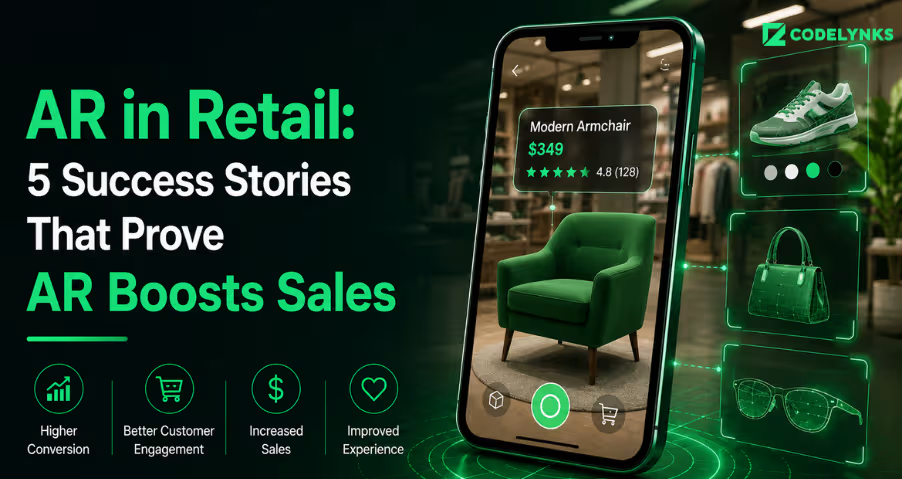
AR in Retail: 5 Success Stories That Prove AR Boosts Sales

AR in retail virtual try-on example

Introduction

The retail landscape has seen a sea of change in recent years, motivated by technological advancement and by the changing expectations of customers. One of the most game-changing innovations in the field is Augmented Reality (AR). Seamlessly blending digital content with the physical world, AR has given retailers new ways to interact with customers, personalize their shopping experience, and thus subsequently make sales.

In this article, we will find five retail success stories that prove how AR bumps up retail sales, increases customer satisfaction, and keeps them agile in an increasingly digital world.

IKEA: AR in Retail Revolutionizes Furniture Shopping

The furniture giant IKEA has been at the forefront of the adoption of AR to enrich customer experience. For instance, the company introduced the IKEA Place app, which could essentially help customers see what furniture would look like in their homes before they purchased it. It offers AR capabilities where customers will be able to see how a different piece of furniture would fit into their space; thus, making better decisions without visiting a store.

The IKEA app provides real-scale, high-resolution 3D models of all products available in the stores for the users to have realistic views of size and design in real-time before making a purchase. This has greatly reduced hesitation from customers about large purchases online, thus highly increasing sales in IKEA’s e-commerce.

IKEA has learned by success how precious it is to develop an immersive experience in shopping: so a customer who trusts himself through an immersive experience creates better conversion rates and lower return rates.

Sephora: AR in Retail Personalizes Beauty with Virtual Try-Ons

The beauty trade is personalization and visual appeal, and for all its latest successes, Sephora has successfully well-positioned its AR technology to maximize the engagement and sales it gets from customers. Using its Virtual Artist app, Sephora lets customers test out various makeup products completely virtually using just a smartphone or, for maximum immersion, through the company’s AR mirrors found in select stores.

This sales strategy, driven by the adoption of AR, can enable the ability of a customer to try various lipstick and eyeshadow looks without even getting up to reach for the testers. Sephora thusly can afford to deliver its modern shopper convenience and personalization – two needs that most modern shoppers have. Therefore, it has recorded increased customer satisfaction, improved sales conversion rate, and in-app engagement time.

The best example of this is the fact that enabling virtual try-ons through AR makes a setting like the customer even more loyal, reduces decision fatigue and enhances product discovery factors towards driving retail sales.

Nike: AR in Retail Ensures Perfect Shoe Fit

The company had, for a long time, been a front-runner for innovation. In using AR for the retail space, it is no exception. Using Nike Fit within its mobile app, the company addressed one of the most common challenges to online shoe shopping—finding the correct size.

This AR-enabled solution scans a customer’s feet and then gives recommendations for the most appropriate shoe size based on their measurements. Nike resolved uncertainty over fitting shoes for customers through its improvement of the online shopping experience, increasing sales, and lowering the incidence of returns that are expensive for the retailer while proving costly for the customer.

Through AR integration, the shopping journey will be personalized, data-driven, and enhanced for shoe buying: thereby giving its customers a bit of assurance when purchasing their product, hence raising conversion rates.

L’Oréal: AR in Retail Enhances Product Discovery

Another that is doing better in beauty using AR is L’Oréal, which has been widely activating the use of augmented reality across various media and touchpoints to discover products more effectively and increase sales. It therefore acquired AR company Modiface and developed apps that permit users to ascertain exactly how they will look with hair colors, skin treatments, and cosmetics before they are bought.

Besides their virtual try-on, L’Oréal also armed in-store experiences with AR that enable customers to scan products for personalized recommendations or more information on related products. It is such immersive experiences that have helped succeed in both in-store and online sales.

In this way, L’Oréal demonstrates how convenience, personalization, and immersive engagement can help empower a firm in the beauty industry to make it easier for customers to make quick, confident choices.

Home Depot: AR in Retail Simplifies DIY Product Visualization

What home improvement and DIY enthusiast wants to know what the product will look like in their environment before they purchase it? That’s when Home Depot realized and therefore developed an AR feature on its mobile app to enable the customer to see how a faucet, appliance, or decoration will look in the homes.

The tool, AR, provides real-time scaling and accurate placement. Thus, customers can easily ensure that the items they choose fit into their space. This has given rise to increased customer satisfaction owing to purchase confidence.

Home Depot has made AR product visualization successful, which reduced product returns and increased overall sales. This supports the argument that even in industries where customers are accustomed to a tactile shopping experience, AR can bridge the gap between digital and physical shopping needs.

Conclusion:

How AR Improves Retail Sales: Through these examples, there is seen a face of change in how retailers will interact with customers and sell. AR in retail immersive experiences bring so many benefits to businesses and consumers, including the following:

Increased Customer Confidence: AR in retail lets shoppers try before buying or see what the product looks like in their space; therefore, no guesswork happens, and customers are more confident about purchasing.

Improve Personalization: AR in retail can be quite a very potent tool for retailers to give customers more personalized shopping experiences. This can greatly lead to increased customer satisfaction and loyalty.

Boosted Engagement: Features on AR in retail , such as virtual try-on or product visualization, come in a fun, interactive experience that keeps the customer engaged for a longer time and therefore boosts sales.

Increase Fewer Returns: By helping customers better understand the fit or look of a product, AR in retail minimizes returns-a real hurdles, particularly in e-commerce.

Increased conversion rates, better customer engagement, and higher sales productivity are some of the benefits gained from retailers that utilize AR in retail.

As cited from these retail success stories, some of the biggest advantages one can acquire from using AR in retail is through improving customer experience as well as the generation of better sales. Whether it’s a virtual try-on, a tailored recommendation, or real-time visualization of products, AR is supporting business needs in the form of evolving demands required by the modern customer.

Codelynks is committed to unlocking business outcomes for companies through AR in retail. We develop customized AR solutions for retailers so they can create immersive and engaging shopping experiences that lead to customer loyalty and revenue growth. Let us help your business grow with AR, so you can dominate the competitive retail landscape.

More Blogs : 7 Game-Changing Examples of How AR and AI Integration is Revolutionizing Industries
AR and AI in Customer Experience: 5 Powerful Case Studies Driving Engagement

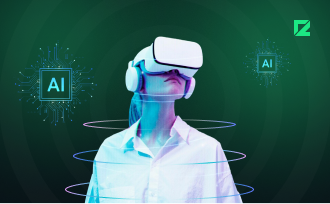
Illustration showing AR and AI in Customer Experience enhancing user engagement

As customer expectations change with every passing day, there is always innovation in how to better communicate the message to the customers. One such revolutionary change in this space is the integration of Augmented Reality (AR) and Artificial Intelligence (AI) in Customer Experience. Together, AR and AI can help companies create data-driven, personalized, and immersive experiences that can increase the brand’s presence and foster loyalty among its customers.

Here, we’ll discuss five integral ways the combination of AR and AI in Customer Experience is revolutionizing customer interaction, backed by real-life case studies and expert insights from the field.

Personalized Shopping Experiences

The future of the retail industry is bringing a revolution with Augmented Reality (AR) and Artificial Intelligence (AI) in Customer Experience. The blend of AR and AI has changed how retail customers perceive their products. AI-powered recommendation engines create personalized shopping experiences while working closely with AR visualization tools that seem tailor-made for every user.

Case Study: Sephora Virtual Artist:

The virtual makeup try-on feature through the mobile application has seen Sephora successfully integrate AR and AI in Customer Experience into their systems. This means that AI analyzes skin tones and preferences as customers see virtually how different products will look on their skin in real time using AR. This reduces return rates while users achieve higher satisfaction levels because they can make more informed purchase decisions.

Security Concerns: Such an enormous amount of customer data requires strong privacy measures, encryption, and adherence to data protection laws like GDPR. The integrity of the AI algorithms and AR platform must also be guaranteed to prevent breaches that could compromise customer trust.

Enhancing Customer Support with Value-added Goods/Services with AR and AI

AI-powered chatbots and virtual assistants, combined with AR, makes for a seamless support experience with customers. Through these solutions, businesses would automate routine customer queries while providing visual, step-by-step aid using AR.

Case Study: IKEA Place and AR Support

For example, IKEA allows customers to place furniture in their homes through augmented reality (AR) and AI in Customer Experience before making a purchase. This enables users to check the size and style of the furniture prior to buying. The app, enhanced with AI, learns user preferences and subsequently provides tailored suggestions on what to purchase. By improving the customer experience with AR and AI, the service also guides customers in assembling the item, turning what could have been a frustrating process into an interactive and engaging experience.

Security Issues: The AI-based customer service system contains considerable personal data, making security a critical concern in AR and AI in Customer Experience. To ensure protection, it is essential to prevent unauthorized access and cyber-attacks, enabling secure communication between AI systems and users. Therefore, multi-factor authentication (MFA) and robust data encryption should form integral components of any AR and AI-powered customer experience system.

Immersive Brand Experience through AR and AI

AR and AI in Customer Experience together are redefining campaign marketing. Brands can generate experiential outreach that captures customer attention in innovative ways. With AI, customer behavior and preferences are analyzed, enabling highly targeted campaigns, while AR creates memorable and immersive interactions for users.

Case Study: The AR Marketing Campaign of Coca-Cola

Coca-Cola leveraged the application of AR and AI in Customer Experience to provide an interactive marketing experience for users. Customers could use a limited-edition can to unlock virtual games and experiences. AI analyzed patterns of user interaction to refine the campaign, enhancing consumer engagement and interaction. By linking AR with AI, Coca-Cola achieved significant increases in brand awareness and customer experience.

Security Risks : Increased integration of AR and AI in Customer Experience into marketing means there’s an open door to cybersecurity risks such as leaking data, phishing attacks through malicious AR applications, or hacking of the AI model. Hence, organizations need to invest in strong security measures such as penetration testing and also in managing secure APIs, be it for their brand or a product related to their customer’s data.

Product Development and Testing Process Simplified

The product development process has greatly been streamlined with AR and AI in Customer Experience.. On the one hand, AI analytics provide insights into user preferences and behavior, while on the other, AR enables companies to create virtual prototypes and conduct user testing scenarios without the need for physical products.

Case Study: Nike using AR in shoe design

Nike uses AR and AI in Customer Experience to support the product development cycle. With the use of AR, the designers view 3D prototypes of shoes. It can be dynamically changed. The AI makes predictions regarding what the customer may prefer and is based on historical sales data and trends. As a result of this process, the development timelines are reduced while improving how accurately these companies can predict the customers’ demand.

Security Concerns: Proprietary information needs to be safeguarded for organizations using AR and AI in Customer Experience for product development. Malicious parties should be kept at bay from AI and AR systems. Therefore, protecting those systems from industrial espionage and intellectual property theft is a challenge. There must be end-to-end encryption as well as secure DevSecOps for safeguarding a product pipeline.

Data Insights for Experience using AI-Powered

Probably one of the more significant benefits of using AR and AI in Customer Experience is the ability to compile a lot of interaction data of customers. From this, AI can provide actionable insights that companies might be able to use continuously to refine and optimize AR experiences for better engagement and conversion rates.

Case Study: BMW’s AR Configurator

BMW has an AR and AI in Customer Experiencecar configurator through which users can design their automobiles themselves with the help of augmented reality in real time. AI analyzes preferences to give specific color schemes, features, and accessory recommendations. The use of AI would allow for tailored experiences for every user and, therefore, more satisfied customers and higher conversion rates for BMW.

Security issues: The collection and analysis of user interaction through AR and AI in Customer Experience raise significant security concerns. Data integrity has to be assured, storage secured and user data anonymized to protect customers from breaches or misuse by companies.

Conclusion: 

Unlocking AR and AI Potential

By combining AR and AI in Customer Experience,, new avenues are opening for customers to achieve unmatched improvements in life in any given industry. From one’s personalized shopping to immersive brand engagement, AI and AR are already raising the bar on the standard of interactions between a business and its customers. A delicate balance, however, is necessary, with cybersecurity robust powers to prevent hacking into people’s user data.

As a cybersecurity and AI-driven technology services firm, Codelynks customizes solutions to ensure that the AR and AI in Customer Experience systems in question are secure, compliant, and innovative. Through their help, businesses can unlock all the potential of AR and AI without being compromised or violating security and privacy.

Similar links : Personalized Shopping with AR: 5 Ways It’s Transforming Retail Experiences

Revolutionary AI in eCommerce: Transforming Customer Service in 2024

Introduction

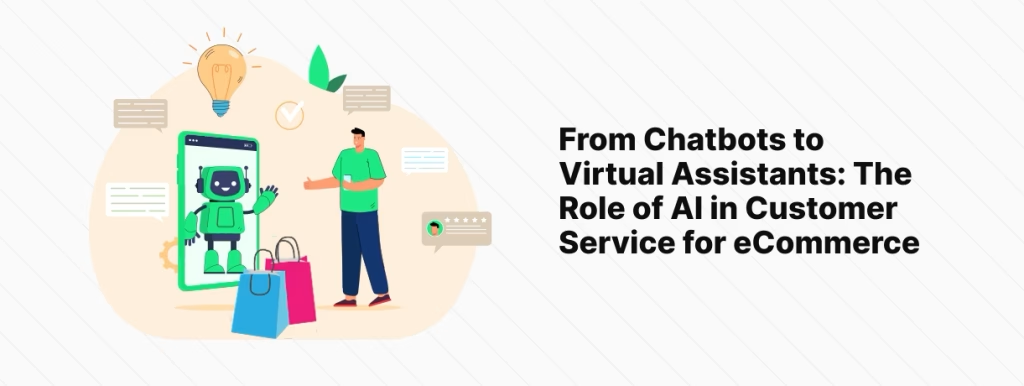
Recently, the eCommerce industry has experienced tremendous change due to the evolution of consumer behaviors and technology. In fact, innovations within artificial intelligence at the level of customer service would be a tremendous part of how online retailers relate to customers because AI-powered chatbots and virtual assistants transform the front-end service delivery.

For eCommerce Businesses, it is of utmost importance to understand how AI-driven technologies like chatbots and virtual assistants can optimize customer interactions.

In this blog, we will try to look into the role of AI within the customer service of eCommerce and discuss some benefits, challenge points, and future trends related to the role of AI.

The Evolution of AI in eCommerce Customer Service

First and foremost, AI stands out as an important technological tool for the automation and betterment of customer service in eCommerce business. Starting from simple rule-based chatbots to virtual assistants with more complex functionalities, AI can manage various customer interactions—whether answering questions, resolving issues, or providing personalized recommendations on what to buy.

Bots: The Great Foundation: Computer programs that mimic the mode of human communication and chatbots have today become the first port of call for most customers facing difficulties in getting appropriate answers. They’re fantastic for giving fast answers to standard questions such as tracking, information on products or services, and FAQs. Since then, they were upgraded from what can be described as question-and-answer tools into a full system that uses NLP in responding to complex customer queries.

Virtual Assistants: The New Generation: Basically, while chatbots may solve some problems, virtual assistants go that extra mile beyond AI customer service in that they offer more complexity in the service offered and apply machine learning to learn over time to give a more personalized, conversational experience when dealing with customers. Virtual assistants are suitable for complex requests-for instance, advising on purchase based on the history of looking or even taking customers through any multiple step procedures such as processing returns, or managing loyalty programs.

Benefits of AI-based Customer Service to e-commerce Businesses

Customer support through chatbots and other virtual assistants has several fundamental benefits to eCommerce businesses:

Timely Availability of Customer Support: One of the most significant benefits of AI-driven customer support is the possibility to operate 24/7. Customer service teams could be tied to a 9-to-5 schedule, but online chat and virtual assistants offer support at any time, allowing customers to answer their questions or get help anytime it’s convenient for them. That is not only good for customer satisfaction, but also a shopping experience, overall.

Instant Responses and Faster Resolution: Since being in the fast-paced world of eCommerce, the customer expects prompt solutions to issues. AI-powered chatbots can deliver instant answers, without a wait time in place and resolves customer concerns in real-time. Whether it is answering questions about products or guiding customers through the checkout process, the chatbot can ensure interactions are both seamless and efficient.

Personalized Customer Interactions: AI is particularly effective when applied to tailor the interaction with customers. The AI-powered virtual assistant gets to know customers through data, such as purchase history and patterns of browsing. This allows the virtual assistant to make personalized recommendations, product suggestions, and promotions based on a customer’s interest. Such a level of personalization makes the shopping experience better and can lead to higher conversion rates because the content being engaged with is one that speaks to their interests.

Cost Efficiency

The AI-based customer service system reduces much of the cost of operations by automating most of the interactions of customers. Thousands of customer queries can be handled by the chatbots at one go, thereby leaving minimum space for an enormous customer support team. Therefore, scalability is very handy in terms of this technology to expand eCommerce businesses which consider their rising customer inflow as a burden requiring much overhead.
Though offering many benefits, AI-powered customer service systems for eCommerce businesses also present some challenges in terms of implementation:

Lack of Human Touch: Many customers still want to interact with human agents, especially when an issue is complicated or emotive in nature. Chatbots excel at the tasks they are designed for: routine requests, but may lack the sensitivity and critical thinking needed to get past a more complex scenario. To this end, many businesses opt for hybrid: chatbots for routine inquiries and human agents when things get complicated.

Language and Context Understanding: Although AI has really taken big strides concerning language understanding, there is still room for improvement in terms of the interpretation of context or ambiguous questions. NLP-based chatbots may misinterpret some phrases or be unable to understand slang, thus confusing or frustrating the customer. The need for continued improvements in AI algorithms is to improve awareness and deepen comprehension of language.

Installation and Operating Costs: While ultimately saving money for businesses in the long run, the short-term cost of implementing such AI-driven customer service systems might be high. Developing a chatbot or virtual assistant which seamlessly integrates well with prevalent systems, like CRMs and eCommerce platforms requires a lot of time as well as resources. Apart from the initial setup cost, AI systems require regular maintenance as well as updates to continue functioning in the same excellent way when changes occur in the customer’s needs.

As AI technology advances, the prospects for the future of AI in eCommerce customer service look bright. A glance at major trends to watch for includes the following:

More Human Like Conversational AI: Future and ongoing developments in AI could ensure that chatbots and virtual assistants become much more conversational, bringing communication much closer to nature. Emotion recognition at higher levels and better integration of contexts will mean AI handling complex customer interactions sympathetically and with accuracy.

Multilingual Support Through AI: E-commerce companies long ago extended globally. The number of visitors also increased, and AI-based chatbots will enable multilingual support largely. Retailers will be free to target a lot more diversified customers. However, through an organization, it would be possible to have standardized and high-quality customer service across multiple languages. It would break the communication barrier and increase the reach.

Interoperability with Augmented Reality (AR): Virtual assistants through AI may, in the near future, come up with interfaces with AR to present customers with even more immersive experiences of customer service. For instance, a virtual assistant can step a customer through virtual stores or real-time product demonstrations using AR while enhancing engagement and satisfaction.

Conclusion

AI in eCommerce customer service is already shifting the paradigm about how businesses interact with their customers. From simple chatbots taking care of routine questions to sophisticated virtual assistants providing personalized experiences on shopping, AI is increasingly being associated with driving efficiency at the same time improving customer satisfaction and reducing operational costs.

Therefore, as AI continues to scale and evolve, it is those companies investing in AI-powered customer service solutions that will best position themselves to deliver a superior customer experience, differentiate themselves from the competitive landscape, and scale efficiently in the ever-evolving eCommerce world.

More Blogs: 6 Essential Secrets Management in Platform Engineering to Secure Multi-Cloud Infrastructures

  • Copyright © 2026 codelynks.com. All rights reserved.

  • Terms of Use | Privacy Policy