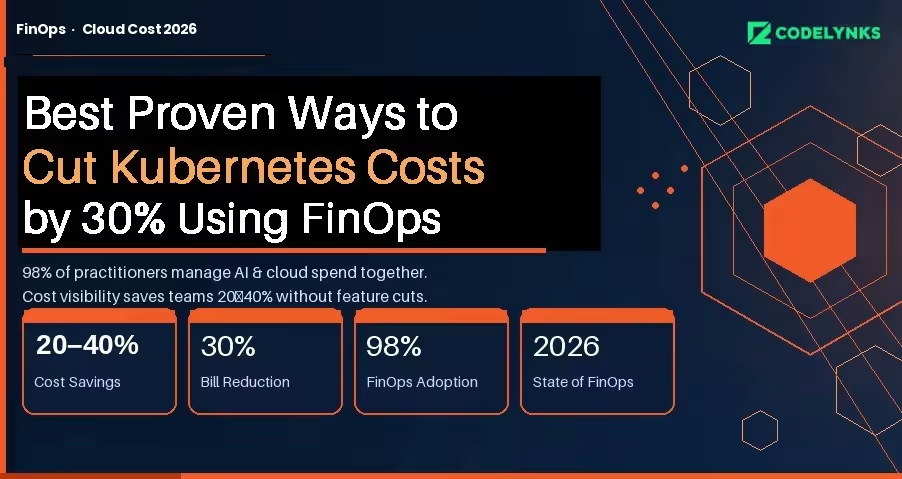
Best Proven Ways to Cut Kubernetes Cloud Costs by 30% Using FinOps in 2026

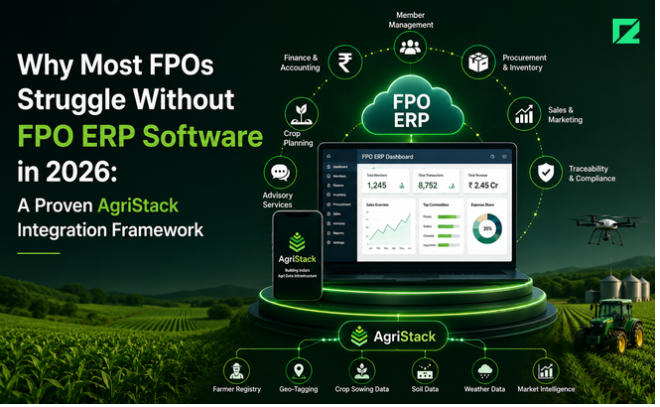
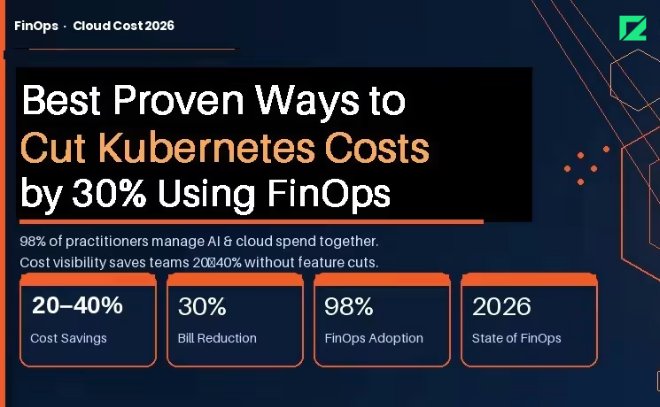
Best proven ways to cut Kubernetes cloud costs by 30 percent using FinOps in 2026 infographic

Kubernetes clusters are expensive to run and expensive to understand. Most engineering teams know their monthly bill; almost none know which workload, team, or feature is responsible for which portion of it. That information gap is where cloud waste lives.

The FinOps Foundation’s State of FinOps 2026 report documents the gap precisely: 98% of FinOps practitioners are now managing AI and cloud spend together, and pre-deployment cost visibility is the top desired capability across organizations of all sizes. Teams that have built this visibility are cutting their Kubernetes bills by 20 to 40 percent without removing features or downgrading performance.

This guide covers the specific practices, tools, and architecture decisions that make that possible.

Why Kubernetes Costs Are Hard to Manage

Traditional cloud cost allocation works at the service or resource level. Kubernetes adds two layers of abstraction: pods share nodes, and nodes are grouped into clusters. A single node bill might represent traffic from a dozen different applications owned by three different teams.

Without active cost attribution, the bill is opaque. You know you spent $40,000 on compute in March. You do not know that $18,000 of that came from a batch job that runs once a day and could run overnight on Spot instances at one-fifth the cost.

The three root causes of Kubernetes waste:

  1. Overprovisioning: Teams request more CPU and memory than workloads use, because the cost of over-requesting is invisible and the cost of under-requesting is an outage.
  2. Idle capacity: Nodes that stay running overnight and on weekends for workloads that only run during business hours.
  3. Unattributed spend: No namespace-level or label-level cost breakdown means no team feels accountable for their portion of the bill.

Step 1: Get Cost Visibility Before You Optimize:

You cannot optimize what you cannot see. The first step is establishing namespace-level and workload-level cost attribution.

GKE Cost Allocation (Now Generally Available) : Google Kubernetes Engine’s cost allocation feature, which became generally available in 2025, breaks down billing by cluster, namespace, and label, and exports that data to BigQuery. If you are on GKE, this is your starting point. Enable it today.

In your GKE cluster settings, enable the Cost Allocation feature under Networking. Configure a BigQuery export in your billing settings. Within 24 to 48 hours you will have namespace-level cost data you can query directly.

A basic BigQuery query to see cost by namespace:

SELECT namespace, SUM(cost) as total_cost FROM `billing_export.gke_cost_allocation`
WHERE DATE(usage_start_time) >= DATE_SUB(CURRENT_DATE(), INTERVAL 30 DAY) GROUP BY
namespace ORDER BY total_cost DESC;

For Multi-Cloud or Self-Managed Clusters : Tools like Kubecost, OpenCost (CNCF open-source), and Finout provide namespace and label-level cost attribution across AWS EKS, Azure AKS, and self-managed clusters. Kubecost’s free tier covers a single cluster; the paid tier adds multi-cluster rollup and anomaly detection.

The minimum label taxonomy to enforce across all workloads:

  1. team: the owning engineering team
  2. service: the product or service name
  3. environment: production, staging, development
  4. cost-center: the budget code for chargeback

Step 2: Rightsize Before You Buy More

Most Kubernetes performance problems are attributed to insufficient resources, so teams over-provision. The data consistently shows the opposite: the average Kubernetes cluster runs at 20 to 30 percent CPU utilization and 40 to 60 percent memory utilization under normal load.

Vertical Pod Autoscaler (VPA) for Rightsizing Recommendations : VPA in recommendation mode (not enforcement mode) analyzes actual pod resource usage and recommends right-sized requests and limits without changing anything automatically. Run it for two weeks, review the recommendations, and apply changes manually to critical workloads.

To deploy VPA in recommendation mode for a deployment:

apiVersion: autoscaling.k8s.io/v1
kind: VerticalPodAutoscaler
metadata:
name: my-app-vpa
spec.
targetRef:
apiVersion: "apps/v1"
kind: Deployment
name: my-app
updatePolicy:
updateMode: "Off" # Recommendation only, no automatic changes

Check recommendations after 14 days:

kubectl describe vpa my-app-vpa

Teams that right-size based on VPA recommendations typically reduce their compute requests by 30 to 40 percent while maintaining the same performance profile.

Horizontal Pod Autoscaler (HPA) for Bursty Workloads: If your workloads have predictable traffic patterns (higher during business hours, lower at night), HPA with custom metrics can scale down to minimum replicas during off-peak hours automatically. Combined with cluster autoscaler removing idle nodes, this is the single highest-ROI optimization for most teams.

Step 3: Shift Non-Critical Workloads to Spot or Preemptible Instances

Spot instances (AWS) and Preemptible VMs (GCP) cost 60 to 90 percent less than on-demand instances. They can be terminated with 2 minutes of notice. That constraint rules them out for stateful or latency-critical workloads, but opens significant savings for everything else.

Workloads that are suitable for Spot:

  1. Batch processing jobs
  2. CI/CD pipeline workers
  3. Data transformation and ETL
  4. Non-critical background workers
  5. Development and staging environments

The Kubernetes node pool configuration for Spot on GKE:

gcloud container node-pools create spot-pool \  --cluster=my-cluster \  --spot \  --machine-type=n2-standard-4 \  --num-nodes=0 \  --enable-autoscaling \  --min-nodes=0 \  --max-nodes=20

Use node selectors or tolerations to schedule appropriate workloads onto the spot pool while keeping production workloads on on-demand nodes.

Step 4: Add AI Spend to Your FinOps Scope

The FinOps Foundation’s 2026 survey found that 98% of FinOps teams are now managing AI spend, making it the fastest-growing cost category under FinOps oversight. If your Kubernetes clusters are running ML inference workloads or AI-adjacent services, those costs need the same attribution and optimization treatment as your application workloads.

Specific controls for AI workloads on Kubernetes:

  1. GPU cost allocation: Tag GPU node pools separately and require workloads to justify GPU requests. GPU nodes cost 3 to 8 times more than equivalent CPU nodes.
  2. Inference scheduling: Batch inference workloads to run during off-peak hours when Spot availability is higher and cost is lower.
  3. Model caching: Cache loaded models in memory rather than loading them on each request. Model load time is pure GPU cost with no output.
  4. Cost per inference: Track cost per model query, not just per pod. This connects infrastructure cost to product usage in a way engineers and product managers can both act on.

Step 5: Implement Chargeback to Create Accountability

The most durable cost control is not a technical optimization. It is making teams financially aware of what they consume.

Chargeback allocates actual cloud costs to the teams or cost centers responsible for them. Showback is the lighter version: teams see their costs but are not charged internally. Both work; chargeback creates stronger behavioral change.

A minimal chargeback implementation:

  1. Export namespace-level cost data weekly to a shared dashboard (BigQuery + Looker Studio, or Kubecost’s cost center report)
  2. Send each team lead a weekly cost summary email for their namespaces
  3. Set budget alerts at 80% and 100% of monthly targets per namespace
  4. Review cost anomalies in your weekly engineering sync, not in a separate FinOps meeting

Teams that see their costs consistently make different infrastructure decisions than teams that do not. The change is not dramatic; it is cumulative. Over six months, awareness alone reduces waste by 10 to 15 percent.

What 30% Cost Reduction Actually Looks Like

Based on implementations across multiple clients, the savings stack roughly as follows:

  1. Rightsizing via VPA recommendations: 15 to 25% reduction in compute spend
  2. Spot/Preemptible for non-critical workloads: 10 to 20% of total cluster cost
  3. HPA + cluster autoscaler for off-peak scaling: 5 to 10% reduction
  4. Chargeback-driven behavioral change: 5 to 15% over six months

The exact number depends on your current state. Teams with no optimization in place and no cost attribution tend to see the largest gains quickly. Teams that are already using autoscaling and have some attribution in place see smaller but still meaningful reductions.

The work is not technically complex. It is operationally consistent. The teams that achieve 30% reductions are the ones that treat infrastructure cost as an engineering metric, not an accounting problem.

Need help building a FinOps practice for your Kubernetes environment? Talk to our engineering team at Codelynks.www.codelynks.com/contact

Related Blogs: RAG vs Fine-Tuning in 2026: The Best Strategy for Your Enterprise AI
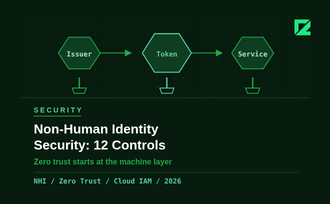
Non-Human Identity Security: 12 Controls to Secure Cloud Identities in 2026

Non-Human Identity Security dashboard showing service accounts, API keys, AI agents, and cloud identity risk controls in 2026

The Problem No One Is Prioritising

Non-human identity security is one of the biggest cloud risks organizations face in 2026. Service accounts, API keys, OAuth tokens, CI/CD identities, and AI agents now outnumber human users across enterprise cloud environments. Without strong governance, these machine identities become easy entry points for attackers.

Most security programs still treat identity security as a human problem: MFA, SSO, and role-based access control for employees. Non-human identities (NHIs) get an afterthought. They are created quickly, granted broad permissions, and rarely audited. When a developer leaves, their service account stays active. When a project ends, its API key keeps working.

The 2026 data makes the stakes clear. The top cloud security risk this year is exposure of insecure machine permissions, not phishing or misconfigured storage buckets. Identity governance for non-human accounts is the gap that attackers are actively exploiting.

What Counts as a Non-Human Identity

Any identity that is not tied directly to a human logging in interactively:

  1. Service accounts (GCP, AWS IAM roles, Azure managed identities)
  2. API keys and access tokens stored in code, config files, or CI/CD pipelines
  3. OAuth service-to-service credentials
  4. Database connection strings and secrets
  5. AI agents and autonomous workflows that access data and execute actions
  6. Webhook endpoints and event-driven function identities

The agentic AI wave has made this harder. AI agents need broad access to do their jobs: read files, query databases, call APIs, and send messages. They are powerful exactly because they can act. That power needs to be scoped carefully, but most teams are moving too fast to do it well.

Why 2026 Is a Turning Point

Three converging factors make NHI security urgent this year.

AI agent proliferation. 35.7% of organizations are now running AI or LLM workloads in production, per CSA data from March 2026. Only 19.1% report adequate visibility and controls over those workloads. AI agents authenticate like service accounts, but they make decisions autonomously. A compromised AI agent identity does not just leak data; it can take action at scale.

Attackers have noticed. Threat actors are increasingly targeting service accounts and AI agent identities for lateral movement. A service account with admin-level IAM permissions is more valuable than a compromised employee account because it does not have MFA, does not get locked out after failed attempts, and does not raise alerts when it runs at 3am.

Governance is lagging badly. Less than one in four organizations has a documented, formally adopted policy for creating or removing AI identities. Forgotten credentials (unused or unrotated keys with high-risk permissions) dropped from 84.2% in 2024 to 65% in 2026. Progress, but still two-thirds of organizations carry this exposure.

The Non-Human Identity Security Checklist

These 12 controls cover the fundamentals. If your team can check all 12 against your current cloud environment, you are in better shape than most.

Discovery and Inventory

  1. Complete NHI inventory. Run a full audit across cloud providers, CI/CD systems, and code repositories. You cannot secure what you cannot see. Tools like AWS IAM Access Analyzer, GCP Policy Analyzer, or third-party NHI management platforms give you the map.
  2. Assign ownership. Every NHI should have a named human owner and a team. When ownership is unclear, no one audits it. Build ownership into your provisioning workflow, not as an afterthought.
  3. Map NHIs to business context. Know which application or workflow each identity serves. This context is essential when triaging access reviews and decommissioning old systems.

Least-Privilege Access

  1. Scope permissions to the task. A service account that needs to read from one S3 bucket should have permission for that bucket only. Not the bucket and everything else in that region. Review and scope every NHI against its actual access patterns using cloud provider access analysis tools.
  2. Prefer managed identities over long-lived keys. AWS IAM roles, Azure managed identities, and GCP workload identity federation eliminate the need to store long-lived credentials. Use them wherever your platform supports them.
  3. Separate identities for separate functions. One service account per application function. Not one shared account for your entire data pipeline. Shared accounts mean shared blast radius.

Credential Lifecycle Management

  1. Enforce credential rotation. Set a maximum lifetime for all long-lived secrets: 90 days is a reasonable default, 30 days for high-privilege accounts. Automate rotation using HashiCorp Vault, AWS Secrets Manager, or equivalent. Manual rotation schedules are not reliable at scale.
  2. Secrets out of source code. Scan your repositories now for hardcoded credentials using tools like GitLeaks or Trufflehog. Set up pre-commit hooks and CI pipeline checks to prevent new secrets from entering the codebase.
  3. Decommission promptly. When a project ends, a developer leaves, or a system is deprecated, the associated NHIs must be revoked within 24 hours. Build this into your offboarding and system retirement checklists.

Monitoring and Detection

  1. Log every NHI action. Enable CloudTrail, GCP Audit Logs, or Azure Monitor for all service accounts and AI agents. Know what each identity accessed, when, and from where. Without logs, you cannot investigate incidents or prove compliance.
  2. Alert on anomalous access. Set alerts for NHIs accessing resources outside their normal scope, calling APIs at unusual times, or attempting actions they are not permitted to take. Behavioural baselines take two to four weeks to establish, but they are worth the setup time.
  3. Quarterly access reviews. Schedule a quarterly review of all NHI permissions against actual access patterns. Remove unused permissions. Revoke identities with zero activity in 60 days. This single practice closes most of the forgotten-credential exposure.

Where to Start

If you have not run a full NHI inventory, start there. You cannot prioritize what you have not mapped. Most teams discover three to five times more non-human identities than they expected during the first audit.

The checklist above is not a one-time exercise. It is a repeating operational cadence. Build discovery, rotation, and access review into your regular security processes, not a separate annual audit that no one has time for.

The teams that solve NHI security in 2026 will be the ones treating machine identities with the same rigor they apply to human accounts. The 100-to-1 ratio is not slowing down. Governance needs to catch up.

Need help securing your cloud identity posture? Talk to our engineering team at Codelynks. www.codelynks.com/contact

FinOps in 2026: Best Ways to Cut Cloud Waste by 30–40%

FinOps in 2026 cloud cost optimization dashboard reducing cloud waste

FinOps in 2026 is no longer optional for organizations trying to control rising cloud costs. The average organization wastes 32 to 40 percent of its cloud budget on idle resources, oversized instances, and unmonitored services. That figure has not improved much in three years, despite better tooling.

The problem is not visibility. Most cloud platforms now surface cost data in reasonable detail. The problem is that cost optimization has been treated as a periodic cleanup task rather than a continuous engineering discipline.

FinOps, cloud financial management as a structured practice, changes that framing. Organizations with a mature FinOps practice achieve 30 to 40 percent cost efficiency improvements. This post covers the specific steps to get there.

What FinOps actually means in 2026

FinOps is no longer defined by cloud cost management alone. In 2026, it covers AI compute, SaaS licensing, private cloud, and data center alongside traditional cloud spend. The FinOps Foundation’s State of FinOps 2026 report shows dedicated FinOps teams are now standard at organizations spending over $1 million annually on cloud.

The organizational model that works is federated governance. A small central FinOps team, typically two to four people, sets tagging standards, cost allocation policies, and optimization targets. Embedded engineers on each product team own day-to-day cost accountability. This separates policy from execution without creating a bottleneck.

The leading teams in 2026 have also shifted to shift-left FinOps: forecasting and modeling costs before deployment, not optimizing after the bill arrives. Infrastructure review includes cost estimates the same way it includes security review.

The five highest-impact optimization moves

1. Commitment-based discounts

Reserved Instances and Savings Plans are the highest-leverage move for stable workloads. On AWS, Reserved Instances reduce compute costs by 30 to 72 percent compared to on-demand pricing. Savings Plans offer 25 to 65 percent discounts with more flexibility across instance types.

The mistake is buying commitments before you understand your baseline. Spend 60 days on demand to establish actual usage patterns, then commit to what you know you will use at minimum.

2. Right-sizing underutilized resources

Compute instances provisioned for peak load and running at 10 to 20 percent average utilization are the most common source of waste. Right-sizing, moving to smaller instance types that match actual usage, typically delivers 15 to 25 percent savings on compute costs.

AWS Compute Optimizer, Azure Advisor, and Google Cloud Recommender all generate right-sizing recommendations automatically. The work is not finding the recommendations. It is building the process to review and implement them regularly.

3. Auto-shutdown for non-production environments

Development, staging, and QA environments running around the clock are pure waste. Automating shutdown during off-hours, typically 18 hours per day on weekdays and full weekends, reduces non-production compute costs by 50 to 70 percent.

This is one of the fastest wins in cloud cost optimization. The implementation is straightforward: tag environments by type, create scheduled start and stop rules through AWS Instance Scheduler or equivalent, and enforce through infrastructure-as-code.

4. Storage tiering

Object storage costs are often invisible until they compound. Data that is rarely accessed should not sit in high-performance storage tiers. S3 Intelligent-Tiering moves data automatically between access tiers based on usage patterns. For data with predictable access patterns, S3 Glacier Instant Retrieval costs 68 percent less than S3 Standard for data accessed less than once per quarter.

5. Tagging for cost allocation

You cannot optimize what you cannot attribute. A complete tagging strategy assigns every resource to a cost center, product team, environment, and project. This sounds obvious. Most organizations have 30 to 50 percent of cloud spend that is untagged or inconsistently tagged.

Enforce tagging at the infrastructure provisioning layer through policy, not convention. Resources that do not meet tagging requirements should not be provisionable. Tag compliance above 95 percent is achievable with proper enforcement and is the foundation for all other cost allocation work.

AI-driven cost management: what it actually means in practice

The 2026 FinOps conversation has a lot of references to AI-driven optimization. The practical reality is narrower than the marketing suggests.

Where AI genuinely helps: anomaly detection. Cloud spend has enough signal that ML-based anomaly detection, available natively in AWS Cost Anomaly Detection and Azure Cost Management, catches unexpected spend increases faster than manual review. An instance type change, a runaway data transfer job, or a misconfigured auto-scaling group shows up as an anomaly within hours rather than at month-end.

Predictive forecasting is also improving. Models trained on 6 to 12 months of usage data generate reasonable 30 and 90-day forecasts that help finance teams budget more accurately than spreadsheet extrapolation.

Where AI does not help: it does not make the organizational decisions. Who owns a cost overrun. How to enforce tagging compliance. Whether to buy a commitment for a workload that might be retired. These decisions require judgment, not automation.

Building a FinOps practice from scratch: the sequence

The sequence matters. Teams that start with tooling before establishing accountability structures waste significant time implementing dashboards that nobody acts on.

  1. Establish visibility. Get all cloud accounts into a cost management tool with consistent tagging. You need to see spend by team, product, and environment before any optimization is meaningful.
  2. Assign ownership. Every resource has an owner. Every cost anomaly has someone responsible for investigating it. Without named ownership, cost reviews produce observations, not actions.
  3. Run a quick-win sweep. Auto-shutdown non-production environments. Delete unattached volumes and unused snapshots. Right-size the five most overprovisioned instance families. This typically recovers 15 to 20 percent of waste within 30 days.
  4. Establish a regular cadence. Weekly cost reviews at team level. Monthly commitment to purchasing reviews. Quarterly architecture reviews with cost as an explicit criterion.
  5. Shift optimization left. Add cost estimation to infrastructure change reviews. Build cost budgets into sprint planning. Make cost a first-class engineering concern, not a finance afterthought.

The 30 to 40 percent efficiency gains that mature FinOps organizations achieve are not from one big optimization. They come from eliminating the same categories of waste repeatedly, building the practices that prevent new waste from accumulating, and treating cloud cost as an engineering discipline with the same rigor applied to reliability or security..

Need help building a FinOps practice or optimizing your cloud spend? Talk to our engineering team at Codelynks: codelynks.com/contact

Explore more blogs : 5 Powerful Ways AR-Powered Retail Apps Are Transforming Customer Experience

What is FinOps and why is it important?

FinOps is a cloud financial management practice that helps organizations optimize cloud spending while maximizing business value. By improving visibility, accountability, and resource efficiency, FinOps enables better cloud governance. Learn more in our FinOps in 2026 guide.

RAG vs Fine-Tuning in 2026: The Best Strategy for Your Enterprise AI
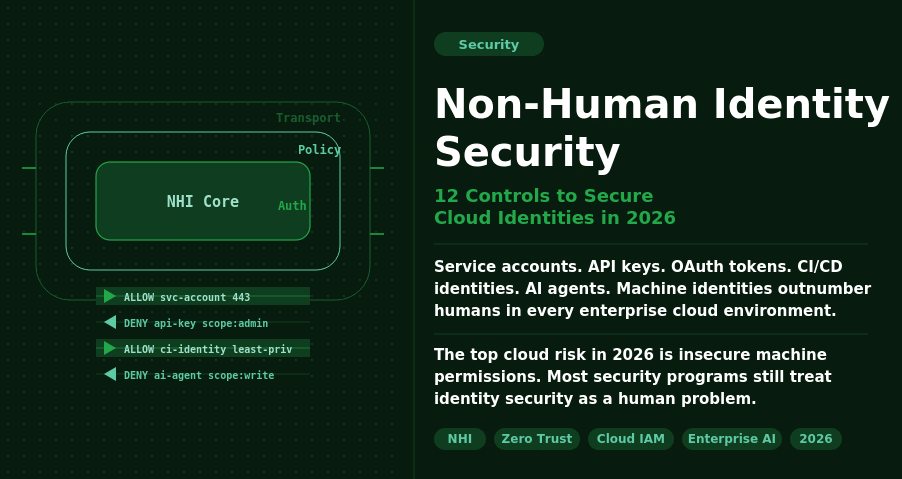
RAG vs Fine-Tuning in 2026 enterprise AI strategy comparison

RAG vs. fine-tuning in 2026 is one of the enterprise AI projects stall not because of bad models, but because of the wrong customization strategy. Teams reach for fine-tuning when they need retrieval or build RAG pipelines when behavior consistency is the real problem.

RAG vs Fine-Tuning in 2026, the global enterprise AI market has passed $150 billion. MarketsandMarkets reports that 73% of enterprises now use some form of customized LLM. The RAG vs fine-tuning decision is no longer academic. It is a production architecture choice with real cost and performance consequences. This post breaks down both approaches, when to use each, and what the hybrid model looks like in practice.

What RAG actually does

Retrieval-Augmented Generation (RAG) keeps the base model unchanged. When a user sends a query, the system retrieves relevant documents from a vector store or knowledge base, injects them into the prompt as context, and generates a response grounded in that retrieved content. The key property: RAG changes what the model can see right now. The model’s underlying behavior, its tone, output format, and reasoning patterns, stays constant. What changes is the information available for each response.

What fine-tuning actually does

Fine-tuning adjusts the model’s weights using domain-specific training data. The result is a model that behaves differently at a fundamental level: it uses domain terminology naturally, follows specific output formats consistently, and applies trained reasoning patterns without requiring those patterns to be prompted each time. Fine-tuning changes how the model tends to behave every time, not just what it can reference.

RAG is the right choice when

  1. Your knowledge base changes frequently (pricing, policies, product specs, regulations)
  2. You need the model to cite sources or ground answers in specific documents
  3. You want to avoid retraining costs every time data changes
  4. Your failure mode is stale or missing facts, not inconsistent behavior

Fine-tuning is the right choice when

  1. Your failure mode is behavior inconsistency: wrong output format, unstable tone, or weak classification accuracy
  2. You need the model to reliably follow company-specific workflows or compliance constraints
  3. Domain terminology is specialized enough that a general model makes consistent errors
  4. You want lower inference costs by using a smaller, specialized model instead of a large general one

The cost picture in 2026

RAG setup costs are primarily infrastructure, vector database, embedding model, retrieval pipeline, and chunking strategy. A well-architected RAG system for an enterprise knowledge base typically costs $30,000 to $50,000 to set up properly, with ongoing hosting and query costs.

Fine-tuning a small model (7B to 13B parameters) on domain data runs $5,000 to $20,000 for training, depending on dataset size and the number of training runs. Inference costs drop significantly with a smaller fine-tuned model compared to routing every query through a large general model like GPT-4o or Claude Sonnet.

The hybrid approach, which leading enterprises are converging on in 2026, combines both. Fine-tune a smaller model for behavior and domain language. Pair it with RAG over company documents and live data sources. You get consistent behavior from the fine-tuned weights and current, grounded answers from retrieval.

Where enterprises go wrong

The most common mistake is treating fine-tuning as the solution to knowledge gaps. Teams collect product documentation, support tickets, and internal wikis, fine-tune a model on them, and expect the model to be an accurate knowledge source. This breaks as soon as the underlying data changes. Fine-tuning is not a substitute for a retrieval system.

The second common mistake is building a RAG pipeline and expecting consistent output formatting and tone. RAG does not train the model. Without explicit prompting or fine-tuning, the model will continue to vary its behavior across different retrieval contexts.

The framework for deciding is straightforward. Put volatile knowledge in retrieval. Put stable behavior in fine-tuning. Stop trying to force one tool to do both jobs.

Evaluation matters more than the architecture choice

The 2026 consensus from teams running LLMs in production is that the RAG vs fine-tuning debate is mostly resolved. The harder problem is continuous evaluation. Both approaches degrade over time. RAG degrades when the knowledge base goes stale or chunking quality drops. Fine-tuned models drift when the domain shifts and no retraining happens.

Production-grade AI in 2026 requires an evaluation loop, not just an architecture decision. That means tracking retrieval precision and answer faithfulness for RAG, and classification accuracy and format compliance for fine-tuned models, continuously, not just at launch.

What we recommend at Codelynks

For most enterprise use cases in 2026, start with RAG. It is faster to build, cheaper to iterate, and handles the most common enterprise AI problem: getting accurate answers from internal data.

Add fine-tuning when you have identified a specific behavioral problem that RAG cannot solve: a classification task that needs high precision, a workflow that requires strict output formatting, or a domain where general model errors are frequent and costly.

We have built both approaches in production for clients across healthcare, retail, and fintech. The decision always comes down to diagnosing the failure mode first, then choosing the tool. Never the reverse.

Conclusion: The decision in two sentences

If your AI is returning wrong facts or outdated information, build a retrieval pipeline. If it is returning inconsistent formats, the wrong tone, or classification errors, fine-tune a model on your domain data.

Need help building a production-grade RAG or fine-tuning pipeline for your organization? Talk to our engineering team at Codelynks: codelynks.com/contact

Explore more blogs: 7 Reasons Why DevSecOps is the Future of Secure Software Development

7 Ways AI-Driven AR Experiences Are Transforming User Interactions

AI-driven augmented reality shopping experience

Introduction

AI-driven AR experiences are transforming how users interact with digital content by creating more immersive, intuitive, and engaging interactions across industries. By combining Artificial Intelligence (AI) with Augmented Reality (AR), businesses can deliver personalized customer engagement, interactive AR shopping experiences, and immersive retail environments that improve user satisfaction and digital experiences.

As a pioneering developer in this field, Codelynks combines AI and AR to provide the most innovative solutions that integrate captivation for users as well as promote their engagement levels. This blog shall witness seven ways in which AI-driven AR redefines user engagements towards changing the future of digital engagements.

AI-Powered Personalization in AR Applications

One of the most important advantages that AI-driven AR experiences have is the fact that they can be personalized based on their users’ preferences and behaviors. AI analyzes user data, modifying an AR experience in such a way that the outcome generated by it is relevant information, suggestions, or features, according to individual interests.

For instance, in the retail domain, AI-prompted AR applications would propose customized products based on purchase history or other browsing. AI will change the AR experiences during learning for a student depending on his learning rate and preference in education. In an endeavor to revolutionize the way an enterprise experience is delivered for its user, Codelynks enhances AR solutions by AI. This helps allow users to create highly personalized experience for enterprises increasing engagement and satisfaction.

Interactive AI-Driven AR for Customer Support

Furthermore, the fusion of AI and AR is revolutionizing the customer support feature by creating a more interactive and much more efficient platform. AR applications assist users in visualizing solutions to problems with instructions or guides placed real-time, while AI assists in understanding and predicting user issues.

For example, when debugging a device, AR can give an immediate view of where and how to fix a problem, which will be driven by AI so no long messages or calls related to support are needed. Codelynks provides companies with AI-powered AR tools that make customer support easier to increase resolution times and enhance customer satisfaction.

How AI-Driven AR Experiences Are Transforming Retail

Retail is one such sector where immersive AR platforms is contributing the most. Due to AI, AR-based apps will now be able to create virtual fitting rooms for the users whereby they can “try on” clothes, accessories, or even furniture from the comfort of homes. These interactive AR systems not only foster greater user interaction but also reduce returns by providing an accurate visual representation of the product.

Based on the preference of a user, AI algorithms analyze it and suggest products to a user, thereby making the experience of shopping more personal and thus providing the right kind of products that suit one’s style. Codelynks partners with retail brands to deliver AI-driven AR experiences that enhance customer engagement, boost conversion rates, and create truly immersive shopping journeys. Retail brands are using AI personalization and augmented reality technologies to create immersive retail experiences and interactive AR shopping journeys that improve customer engagement and conversion rates.

AI and AR in Healthcare

AI-driven AR is thus revolutionizing the face of healthcare by changing how professionals interact with patient data and medical tools. The AR headsets, when combined with AI, offer surgeons a view of critical patient data coupled with real-time images so that the precision medical operations are not inaccurate. It works by showing the AI interpretation of imaging data to diagnose the condition and suggesting possible treatment options.

AI-based AR has also completely transformed the means of medical training. Currently, students are able to interact with 3D anatomical models and to simulate surgeries. Codelynks collaborates with healthcare providers as an attempt to develop AI-based AR to support the provision of better care to patients and more effective educational medicine in interactive and healthier health environments.

AI-Driven AR in Entertainment

From entertainment, AI’s powered AR takes a dramatic shift. Whether it is related to the entertainment industry in forms of games or movies, even digital events, AI propels AR to provide more immersive worlds and response dynamically to any user input through the adaptation of the storyline or gaming environment depending on player behavior and so offering unique and personalized experiences.

Such a level of engagement keeps customers engaged for longer periods of time and helps a designer to build even deeper relationships with content. Here, Codelynks is changing the AR entertainment solution that is driven by AI by developing interactivity, relevance to an individual’s personal life, and excitement in engaging with media users.

AI-Enhanced Learning and Training

AI-powered AR changes the game in education and corporate learning. Introducing the exploratory, hand-in-glove kind of learning environment through AR, while AI customized content adaptation caters to the unique learning requirements of every learner; thus, combining the two enables learners to interact with 3D models, simulations, or real-time problem-solving scenarios that adjust to their performance.

For example, in terms of the study of engineering, AR can visualize working machinery in real-time for learners to engage in explorations of the parts and their roles. AI tracks individual performance and makes recommendations for improvement, thereby ensuring a personalized learning path. Codelynks is intensely collaborating with AI-based AR solutions to rethink education and training in terms of making learning more appealing and effective.

AI-Based AR in Smart Cities and Urban Planning

AI and AR are becoming increasingly significant for urban planning and the development of smart cities. AR lets city planners and architects visualize infrastructure projects that they might prepare, while AI analyzes data to make such designs optimized for needs including traffic flow, population density, and environmental impact.

For the citizens, AI-powered AR are interactive systems for navigation that contain real-time information on services and transportation available in the city, as well as current events happening locally. Codelynks is in tight collaboration with smart city initiatives for the development of AI-augmented AR systems toward improving urban living and easing city planning processes.

Conclusion

AI-Driven AR Experiences – A New Era of User Engagement

Integration of augmented reality solutions is already changing the face of various industries, including improved user interaction and engagement beyond what has been possible for years. Such examples range from personalized retail shopping to immersive environments in education where AI and AR together set a new standard in business and user interactions with digital content.

At Codelynks, we are at the forefront of this technological revolution: cutting-edge AI and AR solutions for businesses to help them deliver next-level experiences. It can be enriching customer service, revolutionizing healthcare, or crating immersive entertainment experience, the expertise of Codelynks combines and transforms how users interact with digital platforms in result by increasing engagement and innovative possibilities.

More Blogs: Boost Forecast Accuracy: 7 Essential AI-Powered Business Analytics Tools

6 Essential Secrets Management in Platform Engineering to Secure Multi-Cloud Infrastructures

secrets management in platform engineering

Introduction

Secrets management in platform engineering: Platform engineers, though far from sight, are the backbone to a world of moving pieces – in the fast-changing landscape of cloud infrastructures, where an ever-changing setup continually creates needs for secure, scalable, and efficient cloud environments. One critical aspect of what they do includes managing secrets: securely managing sensitive information like passwords, API keys, or encryption keys. Because more and more organizations move their architectures into multi-cloud, robust secrets management tools have never been as critically necessary as now.

This blog discusses how engineers building platforms use secrets management in safeguarding cloud-based infrastructures and in adding speed to more agile development workflows.

Role of Secrets Management in Platform Engineering

Secrets management becomes a critical factor for platform engineers, who are responsible for the cloud infrastructure, without undermining the security posture but enabling teams to move fast. Problems arise when needing to balance the importance of giving developers access with the requirement for tight security.

Effective secrets management in platform engineering ensures developers can work safely without compromising cloud security.By implementing secrets management in platform engineering, organizations can secure multi-cloud infrastructures while enabling faster DevOps workflows.Secrets management is something an organization needs irrespective of where it stands in terms of cloud services. In the world of cloud-native infrastructure, this will likely be least based on dynamic credentials, API tokens, and keys that give a license to use any given service, database, or application. If such credentials aren’t managed properly, they can easily breach the security wall and cause data leaks or unauthorized access to critical systems.

Challenges in Multi-Cloud Secrets Management

As companies increasingly use multi-cloud strategies, it has become more complicated for managing secrets across cloud environments. Every cloud provider has their identity management protocols that create a disjointed approach to dealing with secrets.

Some of the common challenges are as follows:

Decentralized Secrets Storage: Secrets storage is distributed across multiple clouds, platforms, and tools, causing trouble in maintaining a centralized, consistent approach toward secrets management.

Dynamically Secrets: Modern cloud platforms rely heavily on dynamically secrets, which expire within a time window. Secrets must be automatically rotated without disrupting services.

Access Control: The right developers shall have access to the appropriate secrets and must not be granted privileges that supersede the requirement.

Secrets Management Tools Pulumi, HashiCorp Vault, and Beyond

Several solutions have emerged to make the job of handling secrets across multiple cloud environments easier for platform engineers. Two of the key solutions are Pulumi’s Environments, Secrets, and Configurations (ESC) and HashiCorp Vault.

Pulumi ESC: The Pulumi ESC provides platform engineers with a centralized tool for managing secrets and configurations across multiple environments in the cloud. It supports all popular programming languages, including Python, Go, and TypeScript, so engineers can code control for both secrets as well as environment configurations.

Key features of Pulumi ESC include:

Centralized Management: Simplifies management across the different environments and clouds.

Version Control: Tracks the change history for secrets and configurations, providing full traceability.

Integration with DevOps Tools: Supports automation workflows and integrates with CI/CD pipelines for seamless secrets rotation and updates.

HashiCorp Vault: The most commonly used secrets management tool is HashiCorp Vault.

Robust security features on:

Secret generation on demand: Vault can dynamically generate secrets on demand. Credentials are always valid for a short time.

Only needed access to specific users: With policy-driven access control, Vault lets engineers exactly who needs to see which secrets.

Vault automatically will rotate those secrets, minimizing exposure.

Both HashiCorp Vault and Pulumi ESC are must-haves for platform engineers with infrastructures that include lots of clouds and complex infrastructures.

Best Practices for Multi-Cloud Secrets Management

For the effective and secure management of secrets, platform engineers shall follow the best practice of:

Centralized Secrets Storage: Through Pulumi ESC or HashiCorp Vault, engineers can centrally store all the secrets, thereby easily tracking and rotating credentials while auditing their activities. A centralized approach reduces mistakes and lost credentials in various cloud settings.

Automatic Secrets Rotation: Secrets rotation should be automated to avoid risk. Most secrets management tools support automated rotation. Credentials will be updated as often as required without disrupting any services. c. Least Privilege Access

Least privilege should also be applied in secrets management. Each user or service must be provided with the least access to ensure that the sensitive data may not be accessed by any unauthorized persons. d. Monitor and Audit Secrets Usage

The platform engineers are supposed to monitor secret usage and send an alert for patterns that look abnormal. Auditing logs can be used to identify potential risks and ensure that company security policies are in place.

Secrets Management and DevOps: Integrating Security in Workflows

As DevOps brings faster development cycles and continuous integration into focus, the management of secrets must now be integrated into CI/CD pipelines to avoid bottlenecks in such workflows. The automation of provisioning and access control of secrets in these workflows ensures that platform engineers can make sure security doesn’t become an anchor for development.

Secrets can be injected automatically into applications at deploy time using tools such as Pulumi ESC and HashiCorp Vault, thus avoiding the sensitive data exposure to developers or build systems.

The future of secrets management in platform engineering

With cloud infrastructures getting increasingly complex, secrets management would play an even more important role. Future innovations in that space will probably revolve around

AI-driven automation would predict and prevent probable security breaches and mishandling of secrets.

Stronger Integration with DevSecOps- Secrets management tools would eventually have more roles in the full lifecycle of DevSecOps, by tightly controlling and auditing secrets across the cycle of development and operations.

Conclusion

Secrets management becomes a crucial component of platform engineering, providing an appropriate level of security for cloud infrastructure while speeding up development cycles. By centrally storing secrets, automating their rotation, and integrating secret management within DevOps workflows, the platform engineers thus protect their environment and enable developers to work more efficiently.

By implementing secrets management in platform engineering, organizations can secure multi-cloud infrastructures while enabling faster DevOps workflows.

More Blogs: Serverless Computing: Top 5 Scenarios and Effective Implementation Tips

5 Steps to Scaling Gen AI: A Data Leader’s Guide to Enterprise Success

Scaling Gen AI in enterprise data strategy

Introduction

Scaling Gen AI opens a door to the potential transformation of organizations around efficiency improvements, better decision-making, and more tailored experiences. Scaling across the enterprise is the challenge. And, thus, the data leader must also possess the capability to construct a strategic operating model accommodating Gen AI.

In this blog, we discuss how data leaders can scale Gen AI effectively-from building an operating model to developing collaboration across teams.

Building a Strategic Operating Model for Scaling Gen AI

An operating model that clearly aligns AI initiatives with business goals must be defined for Scaling Gen AI effectively across the enterprise. There are two options: either fit Gen AI into an existing data or IT team, or establish an especially designed AI team. Each model has its advantages. Integration of Gen AI with the existing teams ensures resource alignment, but the development of a separate team facilitates faster iteration and development outside the boundaries of the existing IT structure.

For example, a logistics company integrated Gen AI into their existing IT system but only went at a snail’s pace because they had to work within the existing architecture. Those organizations which had a differentiated AI team were able to iterate on the Gen AI components faster to at least be one step ahead of the curve.

Designing Core Reusable Gen AI Components

In order to successfully use Gen AI, organizations will need to focus on developing core reusable components. This could include scalable models, frameworks, and tools that can be functionally used across an enterprise. A task force can be established that oversees the process, ensuring IT, data, AI, and business teams all contribute.

Organizations can create component-based development models, whereby they can leverage identical Gen AI tools for myriad different applications, thus ensuring smooth processes and eliminating redundancy. Moreover, aligning similar components with strategies enables value and return on investment.

Data Management as a Foundation for Scaling Gen AI

Proper data management forms the backbone of Scaling Gen AI initiatives within any enterprise. Without robust data governance and infrastructure, Gen AI models will flounder when it comes to retrieving and processing the required information. It is important for data leaders to understand the need for structured data management since nearly 80% of company data is unstructured. Data governance protocols must be put in place such that quality control, access, and compliance checks on both structured and unstructured data are maintained.

Example: A bank-oriented application on managing unstructured data, a business category, and quality of data. This culminated in much more accurate and reliable Gen AI applications with much fewer issues of data being poorly handled.

Collaborative Scalability Approach for Gen AI

Scaling Gen AI successfully requires collaboration between IT, AI, and business teams, not just technical excellence. Open communication with clear roles can actually help the companies avoid duplication of work or disjointed deployment.

Most leading organizations use the strategy of establishing Centers of Excellence (CoE) for Gen AI. CoEs support and enable people in innovation, standardizing AI practices throughout business units.

Example: A global bank rolled out Gen AI in a federated model. This enabled business units to develop Gen AI applications that would exactly meet their individual needs for deployment, hence faster and smoother integration of Gen AI into daily workflows.

Integration of AI with existing systems

The integration of Gen AI into existing data and IT systems will prove difficult, since the technology life cycles of the different systems cannot be set out in the same timeframe. It would be necessary for data leaders to collaborate with their IT departments in synchronizing their roadmaps and establishing a common infrastructure for the AI tools that would work together for better integration.

In addition to the LLMs or orchestration frameworks built, it is essential to think about how components interact with applications already built, so that does not scale into technical debt.

For example, a telecom company tapped on the expertise of their AI team in the development of LLMs incorporated very smoothly into their technology. The type of service they then offered to clients improved and their operations became efficient.

Tools like Microsoft Azure AI and AWS AI Services demonstrate how organizations can integrate Gen AI seamlessly with existing systems to improve scalability and efficiency.

Although Gen AI has wide applicability, not all use cases present equal value. Data leaders should focus high-value use cases in customer engagement, predictive analytics, and operations optimization-those most likely to deliver real business value and improve performance.

Use Case Example: A South American telecom firm implemented Gen AI for customer engagement, and conversational AI reduced operations costs by over $80 million.

Scalability Challenges Organizations have barriers related to scalability, especially around data governance, system integration, and talent acquisition, despite the benefits of Gen AI. In fact, it takes clear change management strategies coupled with continuous upskilling of employees regarding emerging AI technologies.

Organizations should look for quick-win use cases that have an impact in the short term to build trust and garner support from stakeholders, thus avoiding the infamous pilot purgatory.

Conclusion: A Roadmap to Scaling Gen AI

Scaling Gen AI introduces huge opportunities for organizations across industries, but only through strategic means. With reusable Gen AI components, data governance at the center, and co-collaboration, data leaders can make AI across the enterprise a success. Also, strategic identification of high-impact use cases and subsequent integration with the existing systems will be critical to achieve value from Gen AI and create long-term value for businesses that stay ahead of the competition.

The road for data leaders keen to scale Gen AI is complex but full of potential – all those who do it strategically will be well-placed to win.

More Blogs: The AI-Induced Industrial Renaissance: Revolutionizing the Future of Industry

5 Powerful Reasons to Choose Transparent VAPT Services for Cybersecurity

Transparent VAPT services strengthening organizational cybersecurity infrastructure

Introduction

Transparent VAPT services play a crucial role in strengthening organizational infrastructure security in this digital age. The present world has made vulnerability assessment and penetration testing an indispensable tool for protection against external threats. However, due to the increase in cyber threats, it is essential to have transparent VAPT services that maintain openness and trust.

Transparency among VAPT service providers ensures a relationship of trust between the clients and providers, which improves security and enhances the effectiveness of better decision-making processes and compliance.

Why Transparent VAPT Services Matter?

Transparency in transparent VAPT services means clients know what is being assessed, what tools are used, what findings are presented, and what remediation strategies are being followed.

Building Trust and Confidence: Building trust and confidence is the foundation of transparent VAPT services, ensuring clients fully understand how vulnerabilities are detected and mitigated. if the type of testing being conducted, which vulnerabilities are found, and what remediation will look like-all this kind of openness brings forward an association based on trust and integrity.

Better Decision-Making: In the light of detailed reports and insights from VAPT vendors, organizations can make better decisions. Knowing vulnerabilities and possible risks enables an organization to focus on security measures based on the most urgent threats.

Continuous Improvement in Security: An open mentality aids a collaborative work between the business and VAPT vendors in finding ways of ameliorating security strategies over time. This leads to constant improvement and a more robust cyber framework in the fight against threats.

Regulatory Compliance: Most industries have stringent data protection regulations. Clear VAPT services ensure that the business will be meeting industry standards with minimal legal consequences in case of any litigation.

How to Assess Transparency in VAPT Providers

How to test for transparency and openness while selecting a VAPT service provider?

Detailed Reporting: Comprehensive reporting is the hallmark of transparent VAPT services, ensuring actionable insights and remediation steps.

Here is a checklist of major criteria to check:

1. Clarity in Methodologies: A provider offering transparent VAPT services explains testing methodologies, tools, and techniques clearly. Behind-the-scenes knowledge helps clients understand better what to expect and if the approach has been effective.

2. Detailed Reporting: Comprehensive reporting is the hallmark of transparent VAPT services, ensuring actionable insights and remediation steps. Such a report should, therefore, be both concise and actionable in its detail so that the client knows exactly what to do next to enhance their security posture.

3. Clear Communication: Communication should be effective during the VAPT process. Providers should not have a single moment’s hesitation in responding to questions or clarifying the findings and recommending those findings. A responsive provider at the beginning of engagement would be a reflection of commitment toward transparency and teamwork concepts.

4. Client References and Case Studies: Client testimonials, case studies, or references are good sources of insight into a VAPT provider’s transparency. Positive feedback from other organizations suggest that the provider has managed to deliver clear, understandable, and actionable security assessments.

5. Follow Up and Support: Transparency does not end with a final report. A reliable VAPT service provider should show readiness in providing continued support to the businesses regarding the vulnerabilities identified during the assessment. They should be readily available for remediation, questions, and ensure solutions are effectively in place.

Steps toward a Transparent VAPT Process: Steps for Providers

Providers offering transparent VAPT services build secure, trustworthy relationships with clients.

Clear communication, ongoing collaboration, and post-assessment support make transparent VAPT services more effective and reliable for long-term cybersecurity resilience.

Initial Consultation and Needs Assessment: There ought to be an in-depth consultation by providers with regard to the specific needs of the client’s infrastructure. Tailoring services to ultimately align the aspect of alignment with organizational objectives and risks becomes essential.

Clear Tool and Techniques Communication: What tools have been used and what techniques have been applied in conducting the VAPT process needs to be clearly communicated to the client. Technological details concerning the design of vulnerability scanning and penetration testing should be explained to the client for their awareness every step of the way.

Ongoing Collaboration: An open provider is not closed to feedback and works collaboratively with the client when testing. Such continuous input builds a partnership atmosphere, and both work towards mutual security goals.

Post-Assessment Follow-Up: The report, in itself, should not only be presented post the testing phase but also act as a guidance for the client to help her devise the remediation process. Ongoing support, check-ins, and other additional services help implement change effectively for the client.

Benefits of Transparent VAPT Services for Businesses

Increased trust and accountability: A transparent service provider creates trust through self-accountability. The client is likely to have faith in a provider who allows it to understand their processes as well as findings.

Optimization resource allocation: With the detailed reports, combined with clear insights, businesses can make effective decisions about resource allocation on security issues. Knowing that some vulnerabilities are major and should be addressed, others minor, helps a company make effective prioritization decisions on fixes and minimize potential risks.

This helps businesses achieve a better security posture as they have full visibility of their vulnerabilities along with a clear path for remediation, thus enabling businesses to strengthen their cybersecurity framework. Since continuous improvement is such an activity that involves mechanisms in terms of security responses to emerging threats, there will be less paperwork and easier compliance, as depicted as follows –

Simplified Compliance: VAPT services are transparent by nature, making compliance easy for organizations who need to set industry-specific standards. Documentation of various vulnerabilities and remediation processes become well-documented and ready for audits and reviews from the concerned regulatory bodies.

Why Choose Codelynks for Transparent VAPT Services?

Codelynks is one place that genuinely believes transparency is the key to a long-lasting relationship. Be it vulnerability identification, remediation, or finalization, we are transparent about every step that goes into our VAPT services. Here’s what sets us apart:

Comprehensive Reports: We present clear, well-written reports showing vulnerabilities identified, related risks, and suggested remediation efforts.

Tailored Solutions: Every one of our services of VAPT is tailored according to your infrastructure and industry.

Expert Advisory: After the assessment, our cybersecurity experts work closely with you to ensure effective installation of such security measures implemented.

Regulatory Compliance: We support you in attaining the necessary industry regulations, and your business remains compliant.

Ongoing Support: We offer continuous follow-up assistance in helping you break through these complexities of vulnerability remediation and further security improvements.

To learn more about our transparent VAPT services, visit our website or get in touch with us today.

Conclusion

In the fast-paced world of cybersecurity, nothing can replace a transparent practice by engendering trust and rich defenses. When choosing the right VAPT provider that always focuses on open and transparent reporting, companies can always rest assured of informed decisions, compliance, and constant improvement of their cybersecurity strategies.

Codelynks is all set to guide the organization through transparent customized VAPT services that are all set to empower the business houses in maintaining security as well as be better prepared for emerging threats.

More Blogs: Setting Up Appium for iOS Automation on macOS: Beginner’s Guide

6 API Security Best Practices: Protect APIs with mTLS, JWT, and Positive Security

api-security-best-practices

Introduction

There is more concern about API security now that systems increasingly rely on APIs. With APIs fast becoming an integral component of many business activities, connecting mobile apps, IoT devices, and also cloud-based services, APIs have also increased the scope and thus risks associated with security. Following API Security Best Practices is now essential to ensure that every API remains protected against emerging cyber threats. Following API Security Best Practices is now essential to ensure that every API remains protected against emerging cyber threats.

We will discuss how full-fledged security, from API discovery to mutual TLS and OWASP Top 10 security, guards against all kinds of threats against the security of API security framework.

API Security Best Practices: API Discovery and Endpoint Protection

Knowing what you are protecting is the first step towards solving the problem of protecting an API. Generally, organizations do not know all their API endpoints, and thus, there is always a potential for security blind spots. API discovery tools automatically identify your API endpoints and schemas with machine learning and simple heuristics. By combining discovery tools with API Security Best Practices, teams can prevent unauthorized access before it impacts systems. Without this visibility, it would be impossible to ensure that both documented and undocumented APIs are accounted for and secured.

Using the patterns of network traffic, API discovery systems can identify previously unknown endpoints so the security teams can proactively manage and protect these entities. This capability is critically important in large application scenarios having complex microservice architectures.

Implementing OWASP Top 10 for API Security Best Practices

OWASP Top 10 enumerates most common security risks against APIs, including improper authentication, data exposure, DDoS attacks, among other things. 

Cloud-based API security tools will prevent such attacks because they guard against:

  1. Authentication failure: Strong identity verification
  2. Data loss: Protects sensitive information from unauthorized access
  3. Abuse: Blocks unwanted API calls and brute-force attacks
  4. DDoS: Detects volumetric attacks that overwhelm a system.

With security practices integrated into organizations’ systems that align with the OWASP API Top 10, an organization minimizes its risk from critical threats. Security platforms can protect against common vulnerabilities but also automatically block suspicious traffic, thus acting as a preventive measure against exploitation.

Mutual TLS (mTLS) and JWT: API Security Best Practices

Mutual TLS (mTLS) provides yet another layer of security because it actually mandates mutual authentication by both the client and the server of each other through digital certificates, thus filtering only the legitimate devices, in this case, mobile applications or IoT connected appliances.

To further add security, mTLS is used in combination with JSON Web Tokens (JWT) to prevent the illegitimate clients from making API requests. Thus, even though the systems authenticate requests, they also validate those requests to ensure that APIs are accessed only by the proper parties: be it for sending data or for retrieving data.

For example, a healthcare provider who is using APIs to manage personally identifiable patient data should employ mTLS so that only authenticated devices, such as secure mobile applications, can access that system.

Positive API Security: Best Practices for Secure APIs

Block the threats, but ensure that only valid traffic is received through APIs. Good API security relies heavily on OpenAPI schemas predetermined and set which defines what kind of traffic your API should receive. This way the systems can block malformed requests, HTTP anomalies, and untrusted inputs by enforcing these rules.

This approach limits the unknown threats and reduces the attack surface of the API, since they only allow requests that fit your OpenAPI specifications. Positive security models reject all requests that are not put together as if they would behave according to the expected behavior of your API, thus putting up a very good defense against sophisticated attacks.

API Abuse Detection and Sensitive Data Protection as Part of API Security Best Practices

APIs are increasingly being targeted for abuse, the primary aspect of which would be volumetric-that is to say, targeting a large volume of malicious requests that can overwhelm the system-or in a sequential API abuse where attackers try to exploit API calls in some logical sequence.

Security platforms employ heuristics and anomaly detection to identify and stop suspicious activity through various APIs, such as XML, RESTful, or GraphQL. In this way, such systems can prevent abuse of APIs before it negatively impacts services or compromise data through identification of unusual request patterns.

For example, an online shop using GraphQL APIs for product searches may detect attempts by bots doing scraping from the website by sensing high frequency or unusual query patterns different from the actual behavior of legitimate users making queries on the website.

Sensitive Data Detection: Prevention of Data Leaks

The API responses will expose many forms of sensitive data including PII, financial data, or health records. Therefore, ensuring that such information stays behind proper protection and does not come out will be vital to staying in compliance and avoiding breach.

Sensitive data detection tools are always scanning payloads generated in the response from the API to detect and block sensitive information transmission. In case sensitive information is detected, a system can mask or block the data from its release into the open public space. Such an automated approach will help lower the chances of data leakage and will ensure that APIs comply with privacy regulations such as GDPR or HIPAA.

For example, sensitive data detection would ensure credit card numbers are not leaked in the response of the API while processing transactions by an institution engaged in financial activities.

Conclusion

A Holistic Approach to API Security

With today’s globalization, it is very important to defend your infrastructure from the threats coming through APIs, while assuring security, privacy, and performance. All these range from API discovery, OWASP Top 10 security, mTLS authentication, to positive API security. All these implementations will mean that the access methods of the organization through APIs will be secure and deliver flawless performance to the users.

API abuse detection with sophisticated attacks and sensitive data protection are more critical than ever with such sophistication in attacks.

Adopting API Security Best Practices ensures robust protection, compliance, and smooth API performance for modern applications.

More Blogs: Achieving DORA Compliance with Data Protection: A Comprehensive Guide

Powerful Strategies for Zero Trust Security to Boost Productivity and Protect Data in 2026

Zero Trust Security protecting business data

Introduction

Across every industry, digital transformation is accelerating business cycles — and with it, the attack surface that cybercriminals exploit. Today’s organizations face sophisticated threats that can compromise sensitive data, disrupt operations, and erode customer trust overnight. Traditional perimeter-based security models, built on the assumption that everything inside the network is safe, are simply no longer adequate against modern adversaries.

Zero Trust Security rejects that assumption entirely. Rooted in the principle of “never trust, always verify,” it treats every user, device, and application as a potential threat — regardless of whether they are inside or outside the network perimeter. The result is a security framework that is both more resilient and more adaptive than its predecessors.

In this article, we explore how adopting a Zero Trust model strengthens your security posture, reduces financial and reputational risk, ensures business continuity, and — perhaps surprisingly — actively improves team productivity through AI-powered tools.

Zero Trust Builds a Stronger Security Posture

Unlike traditional security architectures that assume implicit trust for anyone inside the network, Zero Trust verifies every access request continuously — regardless of origin. Every user, device, and application is treated as a potential threat until proven otherwise. This identity-centric approach drastically reduces risk by enforcing least-privilege access at every layer.

In practice, Zero Trust achieves this through a combination of strict Multi-Factor Authentication (MFA), real-time behavioral monitoring, and micro-segmentation of the network. These controls ensure that organizations have a clear, continuous view of who is accessing what — and can act instantly when something looks wrong. Even if an attacker obtains a set of valid credentials, the granular access controls in a Zero Trust environment prevent them from moving laterally across systems, dramatically limiting the blast radius of any breach.

Reducing Financial and Reputational Risk: The financial consequences of a cyberattack can be severe. According to IBM’s 2024 Cost of a Data Breach Report, the average cost of a data breach reached $4.88 million — a figure that encompasses data recovery, legal fees, regulatory fines, and lost business. Reputational damage compounds these costs, with long-term impacts on customer trust and brand equity that are difficult to quantify but impossible to ignore.

Zero Trust addresses both dimensions. By proactively narrowing the attack surface and containing threats before they spread, organizations that adopt Zero Trust consistently report fewer high-severity incidents and faster recovery times. For security-conscious leaders, this translates directly into lower insurance premiums, reduced legal exposure, and stronger stakeholder confidence.

Zero Trust Security: Proactive Cybersecurity for Business Continuity

A reactive approach to cybersecurity is no longer sufficient. The volume and sophistication of threats — from ransomware to supply chain attacks — demand a proactive, always-on defense strategy. Zero Trust is designed precisely for this environment.

Continuous Verification for Better Data Protection: Zero Trust enforces continuous verification of every access request, whether the user is on-premises or remote. This is especially critical in regulated industries such as healthcare, finance, and retail, where a data breach can trigger HIPAA, PCI-DSS, or GDPR violations in addition to significant business losses. For example, if an employee attempts to access sensitive financial records outside of their normal role or hours, a Zero Trust system flags the anomaly and requires re-verification — preventing both accidental and malicious data exposure.

Containing Threats to Ensure Business Continuity: One of the most dangerous business continuity risks is the spread of a security incident across interconnected systems. Ransomware attacks, for instance, have forced major organizations to shut down operations for days or even weeks. Zero Trust’s micro-segmentation capability directly addresses this: by isolating network segments, it prevents a compromised node from infecting the broader environment. A real-world example is Google’s BeyondCorp initiative, one of the earliest and most cited Zero Trust implementations, which allowed Google employees to work securely from any network without a traditional VPN — maintaining continuity without sacrificing control. For most organizations, micro-segmentation means that even during an active incident, core operations can continue while the security team contains and remediates the threat.

Impact of Zero Trust Security on Team Productivity with AI Tools

Security is a top priority, but it should not come at the cost of team productivity. This is where Zero Trust excels: it delivers robust protection without creating friction in everyday workflows.

Seamless Security through AI-Powered Access Decisions: Traditional security mechanisms — such as manual approval workflows and blanket VPN access — slow teams down. Zero Trust replaces this friction with intelligent, automated access decisions driven by AI. Tools like Microsoft Entra ID (formerly Azure AD), Zscaler Zero Trust Exchange, and CrowdStrike Falcon continuously analyze user behavior patterns, device health, and location context to make real-time access decisions. When an anomaly is detected — such as a login from an unfamiliar geographic location or an unrecognized device — the system does not simply lock the user out. Instead, it prompts for an additional authentication factor (such as MFA) and grants adaptive access. This keeps legitimate users productive while still enforcing strict security controls.

AI-Powered Automation: Faster Incident Response: Zero Trust environments also leverage AI-driven automation to dramatically accelerate incident response. Rather than requiring security teams to manually triage every alert — a process that is both slow and error-prone — AI tools can automatically initiate containment actions in real time. For example, if a device is flagged as compromised, the system can isolate it from the network instantly, without waiting for human intervention. This reduces mean time to respond (MTTR), minimizes downtime, and frees IT teams to focus on strategic priorities rather than reactive firefighting.

How to Start Implementing Zero Trust in Your Organization

Adopting Zero Trust is not an overnight project — it is a phased journey. Here are the foundational steps organizations can take to get started:

1. Identify and classify your sensitive data and assets. You cannot protect what you cannot see. Begin by mapping your most critical data, applications, and systems. Understanding what needs the most protection is the starting point for any Zero Trust strategy.

2. Enforce strong identity verification. Deploy MFA across all users and systems. Adopt an Identity and Access Management (IAM) platform — such as Okta, Microsoft Entra ID, or Ping Identity — to centralize and enforce identity policies.

3. Apply least-privilege access. Ensure users and systems can only access what they strictly need. Regularly audit and revoke excess permissions. Role-based access control (RBAC) is a core building block here.

4. Segment your network. Implement micro-segmentation to isolate workloads and limit lateral movement. Solutions like Illumio, VMware NSX, or Zscaler can help enforce this at scale.

5. Monitor continuously and automate response. Deploy behavioral analytics and SIEM/SOAR tools (e.g., Splunk, Microsoft Sentinel) to maintain real-time visibility and automate threat response. Zero Trust is not a set-and-forget model — continuous monitoring is essential.

For reference, the NIST Special Publication 800-207 provides a comprehensive framework for Zero Trust Architecture that organizations of all sizes can use as a blueprint.

Conclusion: The Case for Zero Trust Security

As cybersecurity threats continue to grow in volume and sophistication, organizations can no longer afford to rely on perimeter-based defenses built for a different era. Zero Trust Security offers a modern, proactive framework that strengthens data protection, reduces financial and reputational risk, and ensures business continuity — all without sacrificing team productivity.

With AI-powered tools and phased implementation strategies, Zero Trust is more accessible than ever for organizations of any size. Whether you are just beginning your Zero Trust journey or looking to mature an existing program, the investment pays dividends in both security resilience and operational efficiency.

Ready to build a Zero Trust strategy tailored to your organization? Contact our security team to explore how we can help you get started.

More Blogs: The Ultimate 7 Transformative Advantages of Multi-Cloud Strategies Empowering Modern Enterprises

  • Copyright © 2026 codelynks.com. All rights reserved.

  • Terms of Use | Privacy Policy